BioWin Support
Software support is included in the cost of a license.
The most effective manner of obtaining support is via email to support@envirosim.com. Please send your questions and attach the BioWin file to the email. In this way we can be viewing the exact system while working on the issue. EnviroSim software support is focused on ensuring that our customers are getting the most productive use of our modeling software suite. Our support team is here to help with product use, product functionality and product configuration questions.
Consulting vs. Support
The difference between support and consulting :
Questions related to the software such as ‘How do I export my data?’, ‘What model best simulates a trickling filter?’, or ‘How do I customize my Album?’ would be considered support questions.
Questions related to process engineering such as ‘How do I achieve an effluent nitrate concentration of less than 5 mg/l?’ would be better answered by our consulting services team.
Building a Model
Building a BioWin Model
Building a calibrated BioWin model involves configuration of the model and calibration against historical plant data. Typical data required are:
- Physical plant dimensions
- Plant operating data such as recycle rates and DO concentrations
- Influent flow and loading data
- Influent wastewater characteristics
A good overview of a structured modeling approach is provided in “Region-wide Wastewater Treatment Plant Modeling Enhances Facility Management and Planning’, Bye et al“. A comprehensive explanation can be found in the WERF manual ‘Methods for Wastewater Characterization in Activated Sludge Modeling’.
Installation FAQ
You asked? We answered!
On what platforms can I use BioWin?
BioWin is a Windows application and runs on Windows XP/Vista/7/8/10/11
Are 64-bit versions of Windows supported?
Yes, BioWin is not a 64-bit application but it will install and run on 64-bit operating systems.
What are the system requirements for BioWin?
Operating system:
BioWin is supported on the operating systems listed below. BioWin is compatible with both 32-bit and 64-bit versions.
- Windows 7 SP1
- Windows 8.1 SP1
- Windows Server 2008 R2 SP1
- Windows Server 2012 R2
- Windows Server 2016
- Windows Server 2019
- Windows 10
- Windows 11
Processor and Memory:
BioWin will operate on computers that meet the minimum requirements for the operating systems that is installed.
Recommended: 4+ GB of RAM. BioWin simulation speed scales proportionally with the single-core speed of the CPU. A faster CPU will always result in better performance.
Disk Space:
BioWin requires 1.5GB of disk space for installation. Additional disk space is required to save BioWin configurations to the disk.
Screen Size:
BioWin requires a display resolution of at least 1024x768.
Recommended: BioWin has extensive graphical output. A resolution of 1920x1080 or larger is recommended.
Reporting software:
BioWin can generate reports in Microsoft Word and Microsoft Excel. Microsoft Word 2000 or later is required to generate a Word report. Microsoft Excel is not needed to generate an Excel report; however it is required to open and view the report.
Other:
BioWin is protected by a physical hardware dongle. This dongle requires that a USB port is present on the computer.
Can I use BioWin on an Apple computer running OS X?
BioWin does not natively run in OS X but it is possible to install and run BioWin in a supported version of Windows running in a virtual machine such as Parallels.
HLVDD.DLL is missing from your computer
When I start BioWin the following message appears: “The program can’t start because HLVDD.DLL is missing from your computer. Try reinstalling the program to fix this problem.”
The Hardlock drivers were not installed successfully. To reinstall the drivers:
- Remove the Hardlock USB if it is connected to the computer.
- Click the Start button and click on Control Panel.
- Click on Programs and then Programs and Features.
- Select Hardlock Device Drivers and click the Uninstall/Change button. If the Hardlock drivers are not present proceed to Step 6.
- Click Next and then Finish to uninstall the Hardlock drivers.
- Download and run the Hardlock drivers.
- Insert the Hardlock USB into the computer.
Invalid environment settings
When I start BioWin the following message appears: “Error : Invalid environment settings”
The environment variables that control the Hardlock drivers have not been set correctly. To check the environment variables:
- Click the Start button, right click on Computer and click Properties. Alternatively, in Windows Explorer, right click on Computer and click Properties.
- Click Advanced system settings followed by the Environment Variables… button.
- Search for environment variables beginning with HL_ or HLS_ and note their values.
- Download the Hardlock user manual and verify that the environment variables have been set correctly. Descriptions of the environment variables begin on Page 37.
In rare cases this error may occur even if no environment variables have been set. To solve this problem:
- Click the Start button, right click on Computer and click Properties. Alternatively, in Windows Explorer, right click on Computer and click Properties.
- Click Advanced system settings followed by the Environment Variables… button.
- Under User variables or System variables click the New… button.
- In the Variable name field type HL_SEARCH.
- For single license users, type usb in the Variable value field. For network license users, type ip in the Variable value field.
- Click OK on all open dialog boxes.
Unable to find key OR all network licenses in use
When I start BioWin the following message appears: “Error : Unable to find key OR all network licenses in use”
The Hardlock drivers cannot find the Hardlock USB or network license server.
For single license users
- Verify that the Hardlock USB has a solid red light at the tip.
- If not, remove the Hardlock USB from the computer.
- Click the Start button and click on Control Panel.
- Click on Programs and then Programs and Features.
- Select Hardlock Device Drivers and click the Uninstall/Change button. If the Hardlock drivers are not present proceed to Step 6.
- Click Next and then Finish to uninstall the Hardlock drivers.
- Download and run the Hardlock drivers.
- Insert the Hardlock USB into the computer.
- If the Hardlock USB does not have a solid red light at the tip it may indicate a physical problem with the key. Contact EnviroSim Associates Ltd. for further assistance.
For network license users
- Follow the steps above for single license users and verify that the Hardlock USB in the license server has a solid red light at the tip.
- Follow the BioWin network installation instructions.
- Ensure that port 3047 (tcp/udp) is not being blocked by a firewall.
- If the error persists, please contact EnviroSim Associates Ltd. for further assistance.
BioWin closes after entering activation code
After entering the activation code and clicking the Apply button, BioWin says the license has been updated successfully but immediately closes.
The activation code has expired. Contact EnviroSim Associates Ltd. to obtain the current activation code for your key or renew your license.
Unable to create backup file
I am trying to open a BioWin configuration and the following message appears: Error – Unable to create backup file
BioWin creates a backup of the BioWin configuration when it is opened. The backup file is located in the same directory as where the BioWin configuration is located. This error will occur if BioWin does not have write access to that directory. If write access cannot be granted to that directory the BioWin configuration should be moved to a directory with read/write privileges.
The File|Open menu in BioWin automatically opens in the Data directory which by default is installed inside Program Files. Often write access is disabled in this directory. To change the Data directory location:
- In Windows Explorer locate the Data directory.
In 32-bit versions of Windows the default directory is C:Program FilesEnviroSimBioWin X.YData.
In 64-bit versions of Windows the default directory is C:Program Files (x86)EnviroSimBioWin X.YData.
Where X.Y is the version of BioWin that is installed.
- Copy the Data directory to a location that has read/write privileges.
- Start BioWin.
- Go to the Tools|Customize menu and click the File locations tab.
- Select Data files and click the Modify location … button.
- Find and select the Data directory that was copied in Step 1 and click OK.
- Click the Close button.
- Restart BioWin.
This file was generated using a newer version of BioWin
I am trying to open a BioWin configuration and the following message appears: “This file was generated using a newer version of BioWin. This version of BioWin can only open files generated in version X.Y, or an older version.”
BioWin must be updated in order to open the BioWin configuration. Click here to update to the latest version of BioWin.
Note: BioWin configuration files that are saved in a later version of BioWin may not be able to be opened in an earlier version. Backups are recommended.
A COM error occurred
When I start BW Controller the following message appears: “A COM error occurred”
BW Controller uses registry entries that require administrative privileges to create. These registry entries are normally created by the BioWin installer. There are two solutions if you encounter this problem:
- Download and install the latest version of BioWin
- Run BioWin once with administrative privileges.
- Locate the shortcut to start BioWin.
- Right-click the shortcut and click Run as administrator.
- Wait for BioWin to start and close it.
Note: It is only necessary to do this procedure once. Administrative privileges are not necessary once the registry entries have been installed.
Click the steady state or dynamic solver and nothing happens.
When clicking the steady state or dynamic solver, the mouse looks like it is thinking and then nothing happens. Plus, the solver pop-up window is not visible.
Periodically Microsoft releases updates that cause this issue when using an external monitor. The way to resolve this issue is to:
- Unplug your laptop from the external monitor.
- Start BioWin, and try to run a simulation. The steady state / dynamic “start” control dialogue should appear as normal. Run the steady state, solve, say OK.
- Plug back into the external monitor. Try running another simulation, and things should proceed as normal.
BioWin Advantage
BioWin Advantage is an e-newsletter issued regularly by EnviroSim.
The BWA is designed to facilitate knowledge transfer to BioWin users. In each edition a case study approach is applied to highlight BioWin features that will enhance your competitive advantage.
BioWin Advantage 11.1 : Using BioWin Controller for Time-based Aeration Control
BioWin Advantage 10.1 : Investigating Chemical Phosphorus Removal in BioWin 6
BioWin Advantage 9.1 : Taking a Process Train Offline in BioWin
Publications and References
BioWin is used and referenced in papers throughout the industry.
A sample of papers is provided below, organized by year.
2024
- Getting a Grip on AGS Waste Solids Settleability and Phosphorus Release
Eric A. Evans, Ashley Geesman, Dillon Devitt, Matt Thompson, Ron Sova, Abby Kigin - Significance of Process Control Strategy in Dynamic Modeling and Optimization of Full-Scale Post Aerobic Digestion (PAD)
Sara Arabi, Mehran Andalib, Cole Sigmon, Christopher Marks - Phosphorus Sequestration and Recovery with Brushite: Validating Chemical Equilibrium and Process Models with Case Studies
Sara Arabi, Art Umble, Shelley Trujillo, John Gage, Roberto Luna, Cole Sigmon, Christopher Marks, Thomas Worley-Morse4 - A Flexible Design Concept for a 180 MGD MBR Facility
Colin Fitzgerald, Tim Constantine, Paul Swaim, Nikos Melitas, Nan Harrold, Rachel Deco, Michael Liu, Bruce Mansell
2023
2022
2021
2020
Application of Biowin to Biological Nutrient Removal (Bnr) Modeling
Jiaxing Xu1, Ian Buchanan, Zhuanxi Luo
2019
Proceedings of the Water Environment Federation 92nd Annual Technical Exhibition & Conference, Chicago, Illinois – September 21 – September 25, 2019
- Akron WRF Step Feed Phase 2: Design, Operation, Performance and Optimization of Secondary Treatment Wet Weather Expansion and BNR Upgrades
Edward Becker, Tom Sanderson - How much flow can the plant handle? An approach to evaluating maximum wet-weather capacities
Micah Blate, Samantha Burke, Mohammad Ibrahim, Matt Jackson, Mary Ellen Senss, Ya-Chi Tsao, Paul Pitt, Don Tian, Alonso Griborio, Ron Latimer - Modeling Aeration Performance for Energy Reduction
Gillian Burger, Cole Sigmon, Christopher Marks, Conor Tyler, Christopher Bye, Daniela Conidi, Kevan Brian - Going Bubbleless: Design and Start-Up of the Full-Scale MABR Demonstration at the Ejby Mølle WRRF
Uri, T. Constantine, J. Sandino, A. Willoughby, P.H. Nielsen - Achieving Enhanced Biological P Removal: Have we forgotten how to design a BioP plant?
Dold, P. and Conidi, D. - New Aeration Controls for Improved BNR Performance and Cost Savings
Maureen D. Neville , Alexandra T. Doody, Saed Hussain, Karla Sangrey, Jeremiah Brown, Timothy Hilgart - Balancing operator input and cost - a case study for dewatering technology selection
Terry Goss, Anwar Alsanea, Jamey West, Michelle Barry, Jim Marx - Our blowers are too large! We’re wasting too much energy!....hmmm..maybe not!
B. Hodgson, R. Subramanian, B. Cavanaugh, D. Rosso, K. Brischke, M. Garrido-Baserba - Wireless, Accurate and Long-term Nitrogen Monitoring in Wastewater by Solid-State Ion-Selective Membrane (S-ISM) Sensors
Yuankai Huang, Baikun Li, Tianbao Wang, Zhiheng Xu - Realizing the Promise of Nutrient Recovery
Ron Latimer, Bryan Atieh, Wendell Khunjar, Blair Wisdom, Gayathri Ram Mohan - Aeration Improvements Yield Improved Settleability and Nutrient Optimization at the East End WWTF
Benjamin Levin , Paul Rodriguez , Scott Firmin , Deborah Mahoney , Paul Pitt , Joe Rohrbacher - Real-Time Process Controls to Meet Increasingly Stringent Effluent Limits and Improve Operational Sustainability: A Case Study of Three North Carolina Facilities
Victoria Boschmans, Katya Bilyk, Erika Bailey, Nathan Howell, John Dodson, Charles Cocker - Holistic Evaluation and Optimization of Primary Clarifier Performance: Using Advanced Modeling to Address Flow Split and Performance Imbalances in Primary Clarifiers
Will Martin, Samantha Burke, Mohammad Ibrahim, Matt Jackson, Mary Ellen Senss, Ya-Chi Tsao, Paul Pitt, Don Tian, Alonso Griborio, Micah Blate - Planning for Explosive Growth: Leveraging Existing Infrastructure to Optimize Biological Nutrient Removal
Alyssa Mayer, Marshall Yarnell; Will Martin, Scott Phipps - Sensors Versus Analyzers: The Case for Ammonia-based Aeration Control
Mark W. Miller, Pusker Regmi, Jose Jimenez - Nitrogen Removal Process Selection and Innovative Design Approaches for a Small Community in California
Kyle Nelson, Luis Cardenas, Perry Gerdes, Young Eum, James Wang, Joon H. Min - The Low Methanol Diet - A Utility’s Recipe for Process Optimization through Advanced Controls and Operational Excellence
Paula Sanjines, Hari Santha, Kacey King-McRae, Tim Constantine, Adrienne Willoughby - Designing a State-of-the-Art BNR Facility for Salt Lake City
Beverley Stinson, Michelle Barry, Damian Kruk, Gerry Stevens, Keith Sears - Shortcut nitrogen demonstration trial plant performance
Aprilia Vellacott, Andrew Tipping, Nathali Christy, James McLeod, Johanna Gladman, Jackie Moss, Joel Segal, David Lynch, Pusker Regmi, Jose Jimenez - How much data is required for a robust and reliable wastewater characterization
Cheng Yang, Wendy Barrott, Andrea Busch, Anna Mehrotra, Jane Madden, Glen T. Daigger
2018
Proceedings of the Water Environment Federation 91st Annual Technical Exhibition & Conference, New Orleans, LA, USA – September 29 – October 3, 2018
- Complexity versus Simplicity: A Time and a Place for All Models
Steve Reusser, Mathias Allen, Leon Downing - Effects of F/M ratio and Feast-Famine Condition on NO2 Accumulation During Denitrification
Mehran Andalib, Amanda Ford, Art Umble, Mark van Loosdrecht - Quaternary ammonium compound inhibition of biological nutrient removal activated sludge: the significance of good modeling practice on process design
Daniela Conidi, Mehran Andalib, Christopher Andres, Christopher Bye, Art Umble, Peter Dold - Leveraging the Existing Infrastructure to Achieve Sidestream Enhanced Biological Phosphorus Removal and Energy Efficiency Upgrades
Sara Arabi, Eric Lynne - Benchmarking the Sustainability of Sludge-Handling Systems in Small Wastewater Treatment Plants in Ontario
Gregg Archer, Chao Jin, Wayne Parker - Evaluation of Sidestream Deammonification Process Enhancements for Treating High Strength Filtrate at the City of Raleigh’s Neuse River Resource Recovery Facility
Erika L. Bailey,Katya Bilyk, Amy Hanna, David Wankmuller - Meeting the Challenges of Nutrient Removal for a Small Remote Community – The Story of Thompson WWTP
Saibal Basu, Jamie Brewster, Rob De Koninck, Harkamaljeet Singh Gill - Stay in Control of Your Control Strategy Using Advanced Simulation Tools
Katya Bilyk, David Wankmuller, Victoria Boschmans, Chris Bye, Robert Walker - Evaluation of Kinetic and Stoichiometric Parameters for Denitrificationof a Petroleum Refinery Wastewater
Dan Carey, David Marrs, Everett Gill - Modeling Full-scale Granular Sludge Sequencing Tank Performance
Peter Dold, Bill Alexander, Gillian Burger, Mark Fairlamb, Daniela Conidi, Chris Bye, Weiwei Du - Full-Scale Testing Postpones Total Nitrogen Reduction Expansion
Don Esping, Mark Allenwood, Dave Green - Application of Respirometric Techniques to Determine COD Fractionation and Biokinetic Parameters of Sieved Wastewater
Medhavi Gupta, Francesca Giaccherini, Ganesh Ram Dutt Sridhar, Damien Batstone, Domenico Santoro, George Nakhla - Primary Clarifier Process Modeling: Results from Full-Scale Stress Testing and an Overview of Successes and Challenges
Seppi Henneman, Rion Merlo, Don Esping, Hari Seshan, Raymond Kong - Nitrifying below the “Washout” SRT: Experimental and Modelling Results for a Hybrid MABR / Activated Sludge Process
Dwight Houweling, Zebo Long, Jeff Peeters, Nick Adams, Pierre Côté, Glen Daigger, Spencer Snowling, - Refinery Wastewater Treatment Using Two-Stage Attached Growth Bioreactors for Organics Removal and Nitrification
Francois Jolibois, Kar Munirathinam, Lauren Lundquist, David Marrs, Perry Lankford - Evaluation of the Primary Filtration Process at the Lancaster Water Reclamation Plant
Bruce Mansell, Warner Song, Philip Ackman, Nikos Melitas, Martha Tremblay, Onder Caliskaner, Catrina Paez, John Dyson, Terry Reid - Nitrogen Reduction using a Small Budget and Big Ingenuity
Mike Parsons, Katya Bilyk, Rebecca Holgate, Andrea Edgerton, Charles Bott - A model based study: Revisiting conventional BNR configurations with advanced aeration control
Pusker Regmi, Jose Jimenez - RM Clayton Water Reclamation Center - Hydraulic Modeling in InfoWorks ICM
Rasheed Ahmad, Alberto Bechara, Vahe Kokorian, Robert Trivino, Felicity Bennett, Giny Jacob - Sidestream Deammonification Startup - Process Controls
Hong Yin, Kartik Chandran, Zheqin Li, Kristen Reck
Water Environment Federation Nutrient Removal and Recovery: Innovating, Optimizing, and Planning, June 18-21, 2018, Raleigh, North Carolina
- A Model-Based Study: Revisiting Conventional BNR Configurations with Advanced Aeration Control
Pusker Regmi, Jose Jimenez? - Balancing Future Growth and Nitrogen Discharge Limitations in Wastewater Master Planning for the City of Raleigh
Susan Auten, Christine Polo, John Brinkley, Eileen Navarrete, TJ Lynch, Erika Bailey, Steve Tedder - Evaluating Nutrient Removal for Madison’s Utility of the Future
Don Esping, Nancy Andrews, Lloyd Winchell - Full-Scale Testing Postpones Total Nitrogen Reduction Expansion
Don Esping, David Green, Mark Allenwood - Holistic Approach to Phosphorus Sequestration and Recovery at Fox River WRD
Steve Arant, Bikram Sabherwal, James Barnard, Beth Vogt, Jack Russell, and James Kerrigan - Membrane-Aerated Biofilm Reactor (MABR) Demonstration at Ejby Mølle WRRF
Uri, T. Constantine, J. Sandino, A. Willoughby, P.H. Nielsen - Nutrient Recovery Performance and the Optimization of Biological Phosphorus Removal at the F. Wayne Hill Water Resources Center
Gayathri Ram Mohan, JC Lan, Ron Latimer, Mi Lynch, Paul Pitt - Quantification of Struvite Content of Biosolids is Necessary to Avoid Bias in the Assessment of Digester and Dewaterability Performance
Wendell Khunjar, Isaac Avila, Liam Cavanaugh, Alexandria Gagnon, Ron Latimer, Christopher Wilson, Blair Wisdom
Other Papers
- Cost effectiveness of phosphorus removal processes in municipal wastewater treatment
Rania Bashar, Kerem Gungor, K.G. Karthikeyan, Phillip Barak - Biowin Modelling To Develop Strategies To Maximise Energy Generation From Seven Of Anglian Water’s Sludge Treatment Centres
Smyth, M., Kabir, M.M. and Inman D.
2017
Proceedings of the Water Environment Federation 90th Annual Technical Exhibition & Conference, Chigago IL, USA, September 30 – October 4, 2017
- Implementation of Advanced Solids Handling Process in SLC – Post Aerobic Digestion and Low Temperature Thermal Drying
Eric Auerbach, Michelle Barry, Cory Christiansen, Rob Bryant - Innovative Design Approach to Resurrect a Decommissioned WWTP to Meet Ammonia and Phosphorus Limits for Cold and Dilute Wastewater
Saibal Basu, Rob De Koninck, Jamie Brewster, Kirk Melnick - The Old Dog Learns a New Trick: Wet Weather Trickling Filters Utilized to Manage C:N Ratio of Bioreactor Feed for Improved Energy Footprint at an Advanced BNR Facility
Tim Constantine, Carsten Steen, Søren Eriksen, Per Henrik Nielsen, Julian Sandino, Adrienne Willoughby - Design and Operation of Advanced Aeration Control Systems
Alexandra T. Doody, Maureen D. Neville - Applying a Disruptive Technology: Practical Considerations for the MABR at the Ejby Molle facility in Odense, Denmark
S. Downing, A. Willoughby, T. Constantine, J. Sandino, N. Uri and P. Nielsen - Demonstration Scale Mixed Liquor Fermentation Investigation at TRA’s Ten Mile Creek WWTP – Operation, Performance, and Modeling
Patrick Dunlap, Cynthia Robinson, Edmund Mach, Michael Easley, James Barnard, Betty Jordan, Jeff Caffey - Operational Strategies to Minimize Ammonia Release in Anoxic Basins during Biological Nutrient Removal
Murthy Kasi, JB Neethling, Ron Gearhart - Quantification of Struvite Content of Biosolids is Necessary to Avoid Bias in the Assessment of Digester and Dewaterability Performance
Wendell Khunjar - Pushing IFAS Capacity to the Limit – Hydraulics and BNR
Alyssa Mayer, Katya Bilyk, Ron Latimer, Charles Bott, Bob Rutherford, Amanda Ford - A Case Study in the Holistic Evaluation of Wet Weather Flow Management Options for Large Scale Facilities
Randall Boe, Manuel Moncholi, Alonso Griborio - Comprehensive Wastewater Master Planning for the City of Raleigh – A Sustainable Approach for Future Growth
Christine Polo, Katherine Weidner, Susan Auten, John Brinkley, Eileen Navarrete, TJ Lynch, Aaron Brower, Erika Bailey - Full-scale Evaluation of Carbon and Energy Efficient Combined Nitrogen and Phosphorus Removal with Advanced Aeration and Settleability Control
Pusker Regmi, Kartik Chandran, Jose Jimenez - Long-term Dynamic and Pseudo-State Modeling of Complete Partial Nitrification Process at high nitrogen loading rates in a Sequential Batch Reactors (SBR)
Moomen Soliman, Ahmed Eldyasti - The Prius of the Racetrack: 15 Years of Successful Ammonia-based Aeration Control at an Advanced BNR Secondary Treatment Plant Achieving Net Zero Energy
Carsten Steen, Søren Eriksen, Per Henrik Nielsen, Tim Constantine, Julian Sandino, Adrienne Willoughby - “Technomic” Comparison of Biogas-to-Energy Options for the Gold Bar WWTP
Nicholas Szoke, Alfredo Suarez - Modelling the Selective Retention of PAOs and Nitrospira (Comammox?) in a Full-Scale Implementation of WAS Hydrocyclones at the Ejby Mølle WWTP
Nerea Uri, Per Henrik Nielsen, Adrienne Willoughby, Leon Downing, Zheqin Li, Kartik Chandran - Successful Long Term Low DO Operation of a Large WWTP, Providing Reduced Effluent TN Through Increased SND
Aprilia Vellacott, Jackie Moss, Joel Segal, Damien Sharland, David Lynch
Other Papers
- Modeling of Anammox Process with the BioWin Software Suite
G. Dorofeeva, *, Yu. A. Nikolaeva, b, M. N. Kozlova, M. V. Kevbrinaa, A. M. Agareva, A. Yu. Kallistovab, and N. V. Pimenovb
2016
Proceedings of the Water Environment Federation 89th Annual Technical Exhibition & Conference, New Orleans, Louisiana, USA, September 24 – 28, 2016
- Mathematical Modeling of Glycerol Hoarders Specialist Group for Enhanced Biological Phosphorus Removal
Mehran Andalib and Samuel Ledwell - Mathematical Modeling of Biological Selenium Removal from Flue Gas Desulfurization (FGD) Wastewater Treatment
Mehran Andalib, Sara Arabi, Peter Dold, and Christopher Bye - Decentralized Wastewater Collection and Advanced Treatment Technology In Christiansburg, Ohio
Wes Anderson, Tyler J. Molatore, Brice D. Schmitmeyer, and Jerry VanAuker - Competing Goals in the Future of Wastewater Treatment: Tensions Between Nutrient Removal and Net Zero Energy
John Davis, Chandra Mysore, Randy Shaw, and Richard Lawrence - A Comprehensive Evaluation of Struvite Control at the EBMUD Main Wastewater Treatment Plant
Donald Gray, Erika Gardner, Vince De Lange, Paul Pitt, Marc Solomon, Ronald Latimer, and Irene Chu - Lessons Learned from 10 years of Clarifier CFD Modeling – the 2Dc Experience
Alonso Griborio and J. Alex McCorquodale - N2O emissions from sidestream deammonification: using latest generation models to guide optimization
Dwight Houweling, Tim Constantine, Søren Eriksen, Nerea Uri, and Mikkel Holmen Andersen - An Operator’s Dream – Straight Line Dissolved Oxygen Control Plus Energy Savings
John E. Koch, Gary Duranceau, and Chad Tesarik - How I’ve Kept Effluent TN Below 1.5 mg/L Without Supplemental Carbon for 500 Days and Counting
Jeff Mahagan and Katya Bilyk - Respirometry: A Versatile In-Situ Treatment Plant Assessment Tool
Kelly Martin, Michael Dooley, Andy Shaw, Heather Phillips, and David Osgood -
Upstream Biological Treatment for Total Nitrogen Removal in a Direct Potable Reuse Application
Daniel Olson, Ifetayo Venner, and David Ornelas -
Model based investigation of mainstream deammonification approach and operational strategies for low C/N ratio plant after anaerobic treatment
Pusker Regmi, Aprilia Vellacott, Jenelle Watson, Joel Segal, and Jose Jimenez -
Process intensification of a long SRT BNR plant via carbon redirection and carbon efficient nitrogen removal
Pusker Regmi and Jose Jimenez -
Ten Years After – A Utility’s Approach to Changing the World
Jennifer Rogers and Hal Schmidt -
A Comparison of Fine Bubble Diffused Aeration and Mixer/ Aerators at the Portland Water District’s East End WWTF
Joe Rohrbacher, Paul Rodriguez, Scott Firmin, Steve Sloan, Deborah Mahoney, and Benjamin Levin -
Improved Settleability in a BNR Process From Hydrocyclone- induced Biomass Granulation
Julian Sandino, Adrienne Willoughby, Dwight Houweling, Lise Havsteen, Per Nielsen, and Tim Constantine -
Circadian Amplification of Energy Consumption, its Associated Costs, and GHG Emissions in Aeration Processes
Nasir Emami, Reza Sobhani, and Diego Rosso -
Optimizing Nutrient Removal at a 75 mgd ENR Facility – From Process Modeling to Reality
David Wankmuller, Katya Bilyk, Paul Pitt, Evan Bowles, Dana Fredericks, Ron Latimer, Chris Tabor, James Grandstaff, Perry Greene, and Joshua Irby -
Meeting Strict Summer Permit Requirements on Day One:
Start-up of the Western Wake Regional Water Reclamation Facility
Chris White, Damon Forney, Barry Bickerstaff, Katya Bilyk, and David Wankmuller
Other Papers
-
Construction Sequencing of the Humber Treatment Plants South Secondary Plant Upgrades : Plant Staff, Design Team and Construction Specialists Deliver a Design that can be Built and Operated
Vanessa Szonda*, Susan Atlin, Richard Szigeti, Chris Mroczek, Frank Burford, Natasha Niznik
City Of Toronto
Richard Waite, John Morris, Pat Coleman
Black & Veatch -
Implementing a respirometry-based model into BioWin software to simulate wastewater treatment plant operations
Rosa Vitanza, Iginio Colussi, Angelo Cortesi, Vittorino Gallo
2015
Proceedings of the Water Environment Federation 88th Annual Technical Exhibition & Conference, Chicago, Illinois, USA, September 26 to 30, 2015
- REAL TIME PROCESS CONTROL ALGORITHMS COMBINING PROCESS MODELING AND INSTRUMENTATION
Katya Bilyk, Joe Rohrbacher, Paul Pitt, and David Wankmuller - FINAL CLARIFIER PERFORMANCE EVALUATION AND CAPACITY ASSESSMENT AT THE CITY OF ATLANTA’S SOUTH RIVER WATER RECLAMATION CENTER
Ann J. Macrina, John Waddington, Tony Richardson, Larry McNeil, Randy Booker, Kent Hartzog, Annie Blissit, Tim O’Brien, Bikram Sabherwal, Jim Fitzpatrick - OPERATION AND PROCESS ANALYSIS OF FAECAL SLUDGE ANAEROBIC FERMENTATION AND DIGESTION IN GHANA
Justin Shih, Edris Taher, Ato Fanyin-Martin, Kartik Chandran - IS NITRITE-SHUNT HAPPENING IN THE SYSTEM? ARE NOB REPRESSED?
Peter Dold, Weiwei Du, Gillian Burger, Jose Jimenez - THE BATTLE OF “THE BULGE”; TRACKING THE NYC NITROGEN PROGRAM OVER 11 YEARS
James G. Mueller, Keith P. Mahoney, M. Laura Grieco, Paul A. Pitt, Robert D. Smith, Sarah D. Galst, Vera C. Gouchev - IMPACT OF LIMITED ORGANIC CARBON ADDITION ON NITROGEN REMOVAL IN A MAINSTREAM POLISHING ANAMMOX MOVING BED BIOFILM REACTOR
Johnnie Godwin, Mark W. Miller, Stephanie Klaus, Pusker Regmi, Bernhard Wett, Sudhir Murthy, Charles B. Bott - REDEFINING MBR NUTRIENT REMOVAL FOR DRINKING WATER EQUIVALENT REUSE IN A LARGE POTATO INDUSTRY
Al Goodman, Joel Rife - ANAMMOX POLISHING IN MAINSTREAM WASTEWATER TREATMENT TO MEET STRINGENT AMMONIA AND TOTAL NITROGEN LIMITS
Rebecca (Becky) Holgate, Pusker Regmi, Mark W. Miller, Charles B. Bott - LOW ENERGY AND NO EXTERNAL CARBON NITROGEN REMOVAL USING OPTIMIZED PROCESS CONTROL STRATEGIES
Dwight Houweling, Tim Constantine, Julian Sandino, Kartik Chandran, Carsten Steen, Søren Eriksen, Lise Havsteen, Nerea Uri, Per Henrik Nielsen - NITROGEN, PHOSPHORUS, AND INDUSTRY – A MATCH MADE IN HEAVEN
Gary Hunter, David Bunch, Tom Ratzki, Don Miller, Tim Kluge, Kent Newton - MODEL-BASED EVALUATION FOR THE UPGRADE OF AN INDUSTRIAL WASTEWATER TREATMENT PLANT TO ENHANCED BIOLOGICAL PHOSPHORUS REMOVAL (EBPR)
Güçlü Insel, Özlem Ketenci, Gülsüm E. Zengin, Emine U. Cokgor, Peter L. Dold - SOLIDS RETENTION TIME AS A CONTROL PARAMETER FOR ORGANIC NITROGEN
Halis Simseka, Murthy Kasib, Jae-Bom Ohmc, Sudhir Murthy, Eakalak Khan - OPTIMIZING ENHANCED BIOLOGICAL PHOSPHORUS REMOVAL IN OXIDATION DITCHES
Alyssa Mayer, Dan Miklos, Joe Rohrbacher, Katya Bilyk, Sarah Galst - ALTERNATIVE PROJECT DELIVERY AND UNIQUE DESIGN YIELDS MAJOR WRRF COST SAVINGS: THE STRASBURG, VA EXPERIENCE
Jeffery McBride, Jay McKinley, Andrew Casolini - EXPANDING THE TOOLBOX – OPERATIONAL STRATEGIES FOR OPTIMIZING THE A2/O PROCESS AT UPPER BLACKSTONE TO PUSH THE LIMIT OF TECHNOLOGY
Maureen Neville, David Wagoner, Alexandra Doody, Karla Sangrey - BETTER SERVING THE COMMUNITY THROUGH PUBLIC-PRIVATE PARTNERSHIPS
Billy Nichols, Tim Leach - ANTICIPATING THE IMPACT OF MAINSTREAM DEAMMONIFICATION THROUGH ADVANCED PROCESS SIMULATION
Per Henrik Nielsen, Dwight Houweling, Tim Constantine, Julian Sandino, Kartik Chandran, Hongkeun Park, Zheqin Li, Carsten Steen, Søren Eriksen, Lise Havsteen, Nerea Uri - COST-EFFECTIVE AERATION SYSTEM DESIGN FOR A BNR UPGRADE IN NEW YORK CITY
Natalia Perez, Alexander Lopez, Caitlin Hunt, George Bloom - TROUBLESHOOTING ACTIVATED SLUDGE PERFORMANCE THROUGH MICROSCOPIC OBSERVATIONS: FIVE CASE STUDIES
Paul Pitt, Sarah Galst, Mike Lynch, Bryan Atieh, Alonso Griborio - USE OF PEAK FLOW MODELING AND STRESS TESTING TO MINIMIZE CSO CONTROL COSTS AT THE GARY SANITARY DISTRICT
Andy Miller, Dan Vicari, Rhonda Anderson, Bob Theodorou, Drew Thompson, Joel Rife, Siping Zhou - MODELING PROCESS CONTROL STRATEGIES FOR SIMULTANEOUS NITRIFICATION DENITRIFICATION IN AN OXIDATION DITCH
Leslie Knapp, Ann Sager, Gita Iranipour, Sarina Ergas - TREATMENT OF HIGH-STRENGTH INDUSTRIAL SOLVENT WASTE
Emil Schultz, Brad Carter, Ralph Schultz - IMPLEMENTATION OF AMMONIA-BASED AERATION CONTROL (ABAC) AT FULL-SCALE WASTEWATER TREATMENT PLANTS
Kshitiz Uprety, William Balzer, Rick Baumler, Ryan Duke, Charles Bott - OPTIMIZING NASHVILLE’S CENTRAL WWTP: INCREASING CAPACITY AND IMPROVING RELIABILITY, OPERABILITY, AND MAINTAINABILITY
Douglas P. Yarosz, Jr., Ron C. Taylor
2014
Proceedings of the Water Environment Federation 87th Annual Technical Exhibition & Conference, New Orleans, Louisiana, USA, September 27 to October 1, 2014
- CHALLENGES IN STARTING UP AND OPERATING ATTACHED GROWTH DENITRIFYING PROCESS
Dilli Neupane, Roger Silverio, Chuck Longerbeam, Sarah Motsch, Mike McGrath, John McGettigan, Patrick EuDaly, Louis Ortenzio, David Foster, Hong Zhao - DETAILED SAMPLING FOR PROCESS MODELING: COMMON PITFALLS AND LESSONS LEARNED
Alyssa Mayer, Christopher White, Will Martin, Ron Latimer, W. James Gellner - DOING MORE WITH LESS: BNR UPGRADES DURING THE GREAT RECESSION
Katya Bilyk, Brian Duane, Jeff Mahagan - ENVIRONMENTAL SUSTAINABILITY ASSESSMENT OF TECHNOLOGIES FOR REMOVAL OF CONTAMINANTS OF EMERGING CONCERN
Sheikh M. Rahman, Matthew J. Eckelman, Annalisa Onnis-Hayden, April Z. Gu - FUNDAMENTALS OF SLUDGE FERMENTATION FOR ENHANCED BIOLOGICAL PHOSPHORUS REMOVAL
James L Barnard, Ed Kobylinski - FOG, NOT JUST FOR CO-DIGESTION: AN EVALUATION OF PRIMARY SLUDGE AND GREASE TRAP WASTE FERMENTATION FOR A NUTRIENT REMOVAL CARBON SOURCE
Hunter Long , Ronald Latimer , Wendell Khunjar , Katya Bilyk, Charles Bott, Steven Chiesa, Bill Balzer, Jeff Nicholson, Jon DeArmond - GO BEYOND CONVENTIONAL HYDRAULIC TOOLS FOR OPTIMIZED FLOW DISTRIBUTION IN YOUR WASTEWATER PLANT
Sarah Galst, Paul Saurer, Paul Pitt, Xiaodong Tian, Juju Xia, Keith Mahoney - MODELING CARBON DOSING STRATEGIES FOR BNR OPTIMIZATION IN NYC
Michael Lynch, Sarah Galst, Irene Chu, Ronald Latimer, Paul Pitt, Melissa Motyl, Sue Liu, Matthew Osit - MODELING GLYCEROL ACCLIMATED BIOMASS: USING BIOWIN ADD-ON TO MODEL THE NITRITE LOCK
Robert Sharp, Sarah Galst, Dwight Houweling, Richard Jones, Weiwei Du, Allen Deur, Keith Beckmann - NITRIFIER GROWTH RATE TESTING TO DETERMINE THE IMPACT OF CYANIDE ON NITRIFICATION
Mallika Ramanathan; Michael Falk; Samantha Engelage; Nathan Yang; Michael Cunningham; JB Neethling - OPTIMIZATION OF EXTERNAL SUGAR FERMENTATION AT THE ROCK CREEK ADVANCED WASTEWATER TREATMENT FACILITY
Anne Conklin, Peter Schauer, Jeff McCormick - PILOT STUDY COMPARES MBBR AND SUSPENDED GROWTH BIOLOGICAL NITROGEN REMOVAL PERFORMANCE FOR UPGRADES AT THE HOPEWELL REGIONAL WASTEWATER TREATMENT FACILITY
Daniel Hingley, Erika Bailey, Jeanie Grandstaff, Harold Walker, Thomas Blackwell - PILOTING A 40 LPM, ORGANICS-HARVESTING HYDRODYNAMIC SEPARATION PROCESS FOR REDUCING ENERGY NEEDS AND INCREASING ENERGY RECOVERY DURING WASTEWATER TREATMENT
Cory Lancaster, Armin Volkel - REUSE OF PROCESS WATER: EQUIVALENT TO DRINKING WATER QUALITY FOR FOOD CONTACT IN LARGE POTATO INDUSTRY
Al Goodman - THE BEST CARBON FOR THE JOB: USING THE 2010 WERF PROTOCOL TO CHOOSE AN EXTERNAL CARBON ALTERNATIVE FOR ENHANCED NITRATE REMOVAL
Cole Sigmon, Scott Weirich, Chris Douville - UTILIZING NOVEL APPROACH FOR THE DESIGN, CONSTRUCTION AND START-UP OF NORTH AMERICA’S FIRST LEED SEWAGE TREATMENT PLANT AT THE CITY OF DRYDEN
Saibal Basu, Kaeryn Gregory, Eric Wiens, Dean Walker - WHAT IS YOUR FLARE PHILOSOPHY? – IMPACTS ON DIGESTER GAS SYSTEM DESIGN
Ralph B. “Rusty” Schroedel, Ted Hull, Eron Jacobson - MAINSTREAM NITRITE-SHUNT WITH BIOLOGICAL PHOSPHORUS REMOVAL AT THE CITY OF ST. PETERSBURG SOUTHWEST WRF
Jose Jimenez, George Wise, Gillian Burger, Weiwei Du, Peter Dold
OTHER
Innovative Modelling in the Design of the Sacramento Regional Wastewater Treatment Plant for Biological Nutrient Removal
Patrick Dunlap, Andrew Shaw, James Barnard, Heather Phillips, Daniel Wilson, Ken Abraham
Model-based approach to maximize gas production for high-loaded digestion processes
Ryu Suzuki, Sudhir Murthy, Bernhard Wett, Imre Takács
2013
Proceedings of the Water Environment Federation 86th Annual Technical Exhibition & Conference, Chicago, Illinois, USA, October 5-9, 2013.
- ASSESSING THE OPTIMUM SRT FOR ANAEROBIC DIGESTER WITH SLUDGE PRETREATMENT FOR SULFIDE CONTROL
Bipro Ranjan Dhar, Elsayed Elbeshbishy, Hisham Hafez, George Nakhla, Madhumita B. Ray - USE OF DYNAMIC MODELING FOR WASTEWATER TREATMENT PLANT ACCEPTANCE TESTING
Bruce R. Johnson, Gordon Culp, JB Neethling, Dwight Houweling, David Moss - BNR/ENR MODEL CALIBRATION EXPERIENCE INDICATES DEVIATIONS IN KEY MODELING PARAMETERS AND LESSONS LEARNED
Ron J. Latimer, Paul A. Pitt, Joe Rohrbacher, Katya Bilyk - NITROGEN AND PHOSPHORUS REMOVAL FROM WASTEWATER EFFLUENT USING GREEN MICROALGA CHLORELLA VULGARIS: THEORETICAL UNDERSTANDING AND MODEL SIMULATION
Jinsoo Kim, Joo-Youp Lee, Ting Lu, Patrick Dunlap, Andrew Shaw, James Barnard, Biju George, Deborah Metz - MAXIMIZING GAS PRODUCTION AT BLUE PLAINS AWTP FOR HIGH-LOADED DIGESTION PROCESS
Ryu Suzuki, Sudhir Murthy, Josh Mah, Bernhard Wett, John Novak, Matthew Higgins,Christine DeBarbadillo - VERSATILE BIOREACTOR DESIGN REDUCES COST: HRSD VIP NUTRIENT REDUCTION
Dave Kinnear, Tom Kochaba, Dan Hingley, Larry Hentz, Gary Jacobs, Bill M’Coy, JB Neethling, Charles Bott, Sami Ghosn, Kelly Lamp, J. Dano, Mardane McLemore, Dave Waltrip - IMPLEMENTATION OF MONTANA’S 1ST MEMBRANE BIOREACTOR FACILITY
Jeff Ashley - CRASH COURSE FOR THE NEW EPA WET WEATHER STRESS TESTING PROTOCOL
Dan Murray, Matt Crow, Al Sun - NOVEL MICROC MATHEMATICAL MODEL FOR BIOLOGICAL NITROGEN REMOVAL IN ACTIVATED SLUDGE SYSTEMS: INTRODUCTION OF THE MULTI HETEROTROPHIC-BIOMASS SIMULATION
Mehran Andalib, Anthony Giovannone, John Copp, Paul Togna, Samuel Ledwell - CFD MODELING OF ACTIVATED SLUDGE MIXING IN AN OXIDATION DITCH CONVERSION
Edward Wicklein, Katy Rogers, Rob Hunt, Andre Gharagozian, Mark Cocke, Paul Roy - MISCONCEPTIONS AND REALITIES OF ANAEROBIC SLUDGE DIGESTION PROCESS PERFORMANCE
Richard M. Jones, Peter L. Dold - INNOVATIVE APPROACH TO DOUBLE WET WEATHER CAPACITY FOR CSO AND SSO MITIGATION IN ONEIDA COUNTY, NEW YORK
John D. Story, Mark Allenwood, Karl Schrantz, Steven Devan - UTILIZING SIMULTANEOUS NITRIFICATION AND DENITRIFICATION IN BNR PLANTS TO THE MAXIMUM EFFECT
James L. Barnard, Patrick Dunlap, Mark T. Steichen - INVESTIGATION OF THE IMPACTS OF THERMAL ACTIVATED SLUDGE PRETREATMENT AND DEVELOPMENT OF A PRETREATMENT MODEL
Gillian Burger, Wayne Parker - NEW (NUTRIENT, ENERGY, WATER) SUSTAINABILITY PRINCIPLES DRIVE TECHNOLOGY SELECTION IN ADVANCED WATER RECLAMATION APPLICATION
Jeremy T. Kraemer, Srinivas Jalla, Chuck Crandall, Julian Sandino, Randall Boe, Todd Cleaver, Tyler Richards, Holly Elmendorf, Robert Harris - ADVANTAGES AND DISADVANTAGES OF USING GLYCERIN BASED ON EXPERIENCES AT FIVE FULL-SCALE BNR PLANTS
Katya Bilyk, Wendell Khunjar, Joe Rohrbacher, Ron Latimer, Paul Pitt, Theresa Bruton, Charles Bott, Bill Balzer - SUSTAINABILITY IN NUTRIENT REMOVAL: CO-COST AND CO-BENEFITS ASSOCIATED WITH ADVANCED NUTRIENT REMOVAL PROCESSES AND TECHNOLOGIES REVEALED BY COMPREHENSIVE LIFE CYCLE ASSESSMENT
Sheikh Mokhlesur Rahman, Matthew J. Eckelman, Annalisa Onnis-Hayden, April Z. Gu - WHEN DOES BUILDING AN MBR MAKE SENSE? HOW VARIATIONS OF LOCAL CONSTRUCTION AND OPERATING COST PARAMETERS IMPACT OVERALL PROJECT ECONOMICS
Thor A. Young, Sebastian Smoot, Jeff Peeters, Pierre Cote - THE SUCCESSFUL DESIGN, CONSTRUCTION, AND COMMISSIONING OF A 0.5-MGD BIOLOGICAL NUTRIENT REMOVAL PILOT PLANT IN TEN MONTHS
Graham Calciano, William Yu, Rion Merlo, Jill Teplin, Tom Mingee, Bob Witzgall, Kurt Ohlinger, Steve Ramberg, Mai-Tram Le, Jeremy Boyce, Mitch Maidrand, Rod Helm, Denny Parker - MEETING GREENHOUSE GAS GOALS THROUGH EFFICIENT AERATION OPERATION
Ray Kemp, Link Mueller, Shelley Trujillo, Kevin Keil - HOW OVERSIZED BLOWER DESIGNS BECAME AN INDUSTRY STANDARD
Tanja Rauch-Williams, Coenraad Pretorius, Rod Reardon - THE USE OF ON-OFF AERATION TO ACHIEVE NITRIFICATION AND DENITRIFICATION IN A MUNICIPAL WASTEWATER TREATMENT PLANT
Christopher G. Schmit, Samuel Johnson, Mark Hierholzer - EVALUATION OF A PILOT SCALE A/B PROCESS UTILIZING SND AND NITRITE SHUNT WITH A HYDROCYCLONE FOR IMPROVED SETTLEABILITY
Ryder Bunce, Mark Miller, Pusker Regmi, Daniel Hingley, David Kinnear, Charles Bott - OPERATING TWO PROCESS TRAINS IN PARALLEL TO ACHIEVE NUTRIENT REMOVAL: A TALE OF TWO PLANTS AT THE MUNICIPALITY OF EAST ST. PAUL
Saibal Basu, Jamie Brewster, Don Winsor - SIMULTANEOUS BIOLOGICAL NUTRIENT REMOVAL: A STATE-OF-THE-ART REVIEW
Glen T. Daigger, Helen X. Littleton
Journal of Environmental Chemical Engineering, In Press.
- INVESTIGATING WASTEWATER MODELLING AS A TOOL TO PREDICT ANAEROBIC DECOMPOSITION AND BIOGAS YIELD OF ABATTOIR EFFLUENT
Bernadette K. McCabe, Ihsan Hamawand, Craig Baillie
Applied Energy, In Press.
- A CASE STUDY FOR BIOGAS GENERATION FROM COVERED ANAEROBIC PONDS TREATING ABATTOIR WASTEWATER: INVESTIGATION OF POND PERFORMANCE AND POTENTIAL BIOGAS PRODUCTION
Bernadette K. McCabe, Ihsan Hamawand, Peter Harris, Craig Baillie, Talal Yusaf
2012
Proceedings of the Water Environment Federation 85th Annual Technical Exhibition & Conference, New Orleans, LA, USA, September 29 – October 3, 2012.
- EVALUATION OF NITRIFICATION INHIBITION USING SEQUENCING BATCH REACTORS AND BIOWIN MODELING, AND THE EFFECT OF AQUEOUS FILM FORMING FOAM ON BIOLOGICAL NUTRIENT REMOVAL
Daniel M. Hingley,Charles Bott, Bill Balzer, Kevin Parker - CALIBRATION PROTOCOL FOR THE PARTICULATE BIOFILM MODELS USED IN BIOLOGICAL WASTEWATER TREATMENT
Ahmed Eldyasti; George Nakhla; and Jesse Zhu - COMING FULL CIRCLE: MOVING WASTEWATER TREATMENT PLANTS TOWARDS ENERGY NEUTRALITY
Matthew P. Van Horne, Joe Rohrbacher, Paul Pitt - MODEL-BASED AERATION SYSTEMS DESIGN -CASE STUDY NANSEMOND WWTP
Leiv Rieger, Charles B. Bott, William J. Balzer, Richard M. Jones - “DOING THE TWO-STEP” – REDUCED ENERGY CONSUMPTION SPARKS RENEWED INTEREST IN MULTISTAGE BIOLOGICAL TREATMENT
Tim Constantine; Dwight Houweling; Jeremy Kraemer - THE BEST BANG FOR THE BUCK: MAKING THE MOST OF AVAILABLE INFLUENT CARBON FOR NUTRIENT REMOVAL
John Bratby, Jose Jimenez, Denny Parker - PILOT TESTING NUTRIENT RECOVERY FROM WAS STREAMS FOR STRUVITE CONTROL AND RECYCLE LOAD REDUCTION
Ron Latimer, Vivi Nguyen, Enrique Vadiveloo, Paul Pitt, Robert Harris, Richard Porter, Holly Elmendorf, Tyler Richards - TRY BEFORE YOU BUY – BENCH-SCALE DIGESTION EVALUATION OF POTENTIAL CO-DIGESTION WASTE STREAMS
Scott A. Hardy, Madan Tandukar, Spyros G. Pavlostathis, Richard Porter, Holly Elmendorf - A THEORETICAL AND PRACTICAL EVALUATION OF STRUVITE CONTROL AND RECOVERY: TWO CASE STUDIES
Enrique Vadiveloo, Robert Fergen, Manuel Moncholi, Paul Pitt, Robert Sharp, David Wankmuller, Ron Latimer - NITRIFICATION 101 REVISITED: SIGNIFICANCE OF MULTISTEP NITRIFICATION IN ACTIVATED SLUDGE PLANT DESIGN AND OPERATION
Richard M Jones, Christopher M. Bye and Peter L. Dold - REGION-WIDE WASTEWATER TREATMENT PLANT MODELING ENHANCES FACILITY MANAGEMENT AND PLANNING
Christopher M. Bye, José R. Bicudo, Richard M. Jones - USING A DYNAMIC PROCESS MODEL TO INVESTIGATE FULL-SCALE UPGRADES TO MAXIMIZE SECONDARY WET WEATHER TREATMENT USING STEP-FEED
Ting Lu, Andrew Shaw, Anjana Kadava, James Fitzpatrick, Scott Reed, Donald Linn - CALIBRATING PROCESS AND HYDRAULIC MODELS TO RE-RATE THE BIG DRY CREEK WWTF
Heather M. Phillips, Mike Johnson, Lela Perkins, Kent Brugler, Steve Grooters, Tim Woodard - MODELING THE POTENTIAL IMPACT OF SLUDGE PRE-TREATMENT TECHNOLOGIES
Christopher M. Bye, Richard M. Jones, Peter L. Dold - CAPITAL AND OPERATING COST EVALUATION OF CAS VS. MBR TREATMENT
Thor Young, Mert Muftugil, Sebastian Smoot, Jeff Peeters - SELECTING THE RIGHT TREATMENT PROCESS FOR A NEW WATER RECLAMATION FACILITY
Sudhanva Paranjape, Rod Reardon; William J. Hurley, Larry Tunnell, Mark Ikeler - COMPARISON OF PROCESS ALTERNATIVES FOR ENHANCED NUTRIENT REMOVAL: PERSPECTIVES ON ENERGY REQUIREMENTS AND COSTS
Derya Dursun, Jose Jimenez, Aaron Briggs - A FRAMEWORK FOR REAL-TIME PROCESS CONTROL
Katya Bilyk, Joe Rohrbacher, Bill Balzer, Ron Latimer, Paul Pitt, Alan Stone, Charles Bott, and Rick Baumler - A TALE OF TWO NUTRIENTS
COMPLIANCE PLANNING FOR AN UNCERTAIN WORLD
Steven M. Ravel, Richard Leger - FIELD VALIDATION OF SEQUENCING BATCH REACTOR AND CLOTH MEDIA FILTRATION TECHNOLOGIES TO ATTAIN ULTRA-LOW NUTRIENT LEVELS
Terence K. Reid, Al Zerbato, Rungrod Jittawattanarat, Lloyd W. Johnson, Kenneth A. Mikkelson, Matthew Castillo - DEBOTTLENECKING ANAEROBIC DIGESTER CAPACITY – SOMETIMES WAS THICKENING ISN’T ENOUGH
Theresa Bruton, Michael Bullard, Scott Hardy, Ron Latimer, Amy Hanna, Richard Porter - BNR MBR FOR LOW LEVEL PHOSPHORUS – THE LITTLE THINGS MATTER
Mario Benisch, JB Neethling, Casey Fisher, Don Keil - KDO EXPERIMENTS AT NYC DEP’S FULL-SCALE DEMONSTRATION FACILITY
Robert Sharp, Sarah Dailey, Melissa Motyl, Allen Deur, Keith Beckmann - THE ECONOMIC FEASIBILITY OF URINE SEGREGATION AS A MEANS OF WASTEWATER NUTRIENT REDUCTION
John Davis, Nora Kim, Karen Harrison - THE DIRTY SECRET OF PRIMARY SLUDGE PREFERMENTERS
John Bratby, Stephanie Fevig, Jose Jimenez - UPDATING AN OLD APPROACH TO SOLVE A MODERN PROBLEM TO REMOVE NITROGEN (AND SAVING MONEY IN THE PROCESS)
William Brink, Rhodes Copithorn, Marc Drainville, Kristi Perri, Thor Young - ECONOMIC EVALUATION OF ALTERNATIVES FOR SIDESTREAM NUTRIENT REMOVAL AND RECOVERY
Wendell Khunjar, Katya Bilyk, Ron Taylor, Paul Pitt, and David Wankmuller - MAXIMIZING SECONDARY WET WEATHER TREATMENT CAPACITY AT A NORTHWEST CSO FACILITY
Adrienne Menniti, Bruce Johnson, Glen Daigger, Samuel Jeyanayagam, Lynne Chicoine, Paul Suto, Vu Han , Chris Selker, Mike Stebbins, Mike Ciolli - MYTHS ABOUT AMMONIA FEEDFORWARD AERATION CONTROL
Leiv Rieger, Richard M. Jones, Peter L. Dold and Charles B. Bott - MOVING BED BIOFILM REACTOR TECHNOLOGY – EXPERIENCE AND PERFORMANCE WITH THE FIRST INSTALLATION IN NORTH CAROLINA
John Brinkley, Robert Souza - ASSESSING VARIABILITY FOR NUTRIENT REMOVAL IMPROVEMENTS
Leon Downing, Mike Gerbitz, and Dale Doerr - SOURCE SEPARATION OF URINE AS AN ALTERNATIVE SOLUTION TO NUTRIENT MANAGEMENT IN WASTEWATER TREATMENT PLANTS: A MODEL-BASED ANALYSIS
Jose Jimenez, Charles Bott, Nancy Love, John Bratby - ADVANCED RESEARCH AND DEVELOPMENT OF BNR OPERATIONS FOR THE NEW YORK CITY DEPARTMENT OF ENVIRONMENTAL PROTECTION
Sarah Dailey, Peter Young, Robert Sharp, Vincent Rubino, Melissa Motyl, Allen Deur, Keith Beckmann - MASTER PLAN FOR TN OF 0.9 MG/L AND TP OF 0.05 MG/L LEADS TO A CONVENTIONAL TREATMENT AND REUSE RECOMMENDATION AND SAVES $300 MILLION
Katya Bilyk, Ron Taylor, Paul Pitt, John Dodson, Amy Hanna
2011
Proceedings of the Water Environment Federation 84th Annual Technical Exhibition & Conference, Los Angeles, California, USA, October 15 – 19, 2011.
- MODELING A TWO-STAGE TRICKLING FILTER WASTEWATER TREATMENT PLANT TO SIMULATE THE FATE OF DISSOLVED ORGANIC NITROGEN AND ITS BIODEGRADABILITY
Murthy Kasi, Halis Simsek, Tanush Wadhawan, Christopher Bye, Mark Blonigen, Eakalak Khan - MOVING FORWARD IN PROCESS MODELING: INTEGRATING ANAEROBIC DIGESTER INTO LIQUID STREAM MODELS
Derya Dursun, Jose Jimenez, John Bratby - EFFECTIVE USE OF PROCESS MODELING FOR A COMPARISON OF SLUDGE DEWATERING SIDESTREAM TREATMENT ALTERNATIVES FOR A LARGE MUNICIPAL WASTEWATER TREATMENT FACILITY
Gary Grey, Morton Orentlicher - COMPARATIVE MODELING OF CIRCULATING FLUIDIZED BED BIOREACTOR (CFBBR) FOR BIOLOGICAL NUTRIENT REMOVAL FROM LANDFILL LEACHATE
Ahmed Eldyasti; Mehran Andalib; Hisham Hafez; George Nakhla; and Jesse Zhu - PROCESS IMPROVEMENTS TO REDUCE ENERGY USAGE AND IMPROVE PERFORMANCE
Karen Harrison, Colin D. Groff, David Kowalski, John Davis - FERMENTATION: UNLEASHING THE POWER AND MAKING IT WORK
A. Keller, Matt Bond, and Edmund.A. Kobylinski - ONE DESIGN FOR TWO SUBREGIONAL MEMBRANE BIOREACTOR WATER RECLAMATION FACILITIES
Gilmore, C. Lopez, L. Olds, J. Hagstrom - APPLICATION OF STRUCTURED SHEET MEDIA IFAS FOR AMMONIA POLISHING FROM A TRICKLING FILTER SOLIDS CONTACT PROCESS
James J. Flamming, David L. Woodman, Frank M. Kulick III - IMPROVED DESIGN OF AERATION SYSTEMS BY USING DYNAMIC SIMULATION
Leiv Rieger, Peter Schauer, Andrew Shaw - OBSERVATIONS ON THE PERFORMANCE AND MODELING OF GLYCERIN- AND METHANOL-FED DENITRIFICATION FILTERS
Katya Bilyk, Peter Dold, Samuel Ledwell, Ron Latimer, Paul Pitt, Mary Sadler - A NOVEL HYBRID PROCESS COMBINING BIO-SORPTION AND ANAEROBIC DIGESTION TO APPROACH ZERO ENERGY CONSUMPTION AND REDUCE SLUDGE PROUCTION
Liu, l. Xiao, E. Jordan, R. Wikramanayake, M. Doyle, J. Hu - WHEN INFLUENT SAMPLING GOES WRONG: AVERTING CAPACITY CRISIS
Ron Latimer, Paul Pitt, Holly Elmendorf, Tyler Richards, Richard Porter - LOW LIMITS FOR AMMONIA – IMPLICATIONS FOR FACILITY DESIGN AND OPERATION
Tanja Rauch-Williams, Mary-Beth Sullivan, Rod Readon - CENTRATE EQUALIZATION – WHAT YOU DON’T CONTROL CAN HURT YOU
Stephanie Fevig, John Bratby, Chris Douville, Greg Farmer - LOW TEMPERATURE BIOLOGICAL PHOSPHORUS REMOVAL AND PARTIAL NITRIFICATION IN A PILOT SBR SYSTEM
Qiuyan Yuan, Jan. A. Oleszkiewicz
2010
Proceedings of the Water Environment Federation 83RD Annual Technical Exhibition & Conference, New Orleans, LA, USA, October 2 – 6, 2010.
- DYNAMIC MODELING OF DIFFUSED AERATION REQUIREMENTS FOR HIGH-RATE PLUG-FLOW AND STEP-FEED ACTIVATED SLUDGE SYSTEMS
Schauer, S. Murthy, S. Kharkhar, A. Shaw, C. deBarbadillo, T. Johnson, P. Thomson - COMBINING STRESS TESTING AND DYNAMIC LINKING OF WHOLE PLANT SIMULATORS AND CFD FOR THE EVALUATION OF WWTP WET WEATHER CAPACITY
Griborio, J. Rohrbacher, M. McGehee, P. Pitt, R. Latimer, J. Gellner - SIMULTANEOUS NITRIFICATION-DENITRIFICATION TO MEET LOW EFFLUENT NITROGEN LIMITS: MODELING, PERFORMANCE AND RELIABILITY
Jimenez, D. Dursun, P. Dold, J. Bratby, J. Keller, D. Parker - A 20-MGD BNR DEMONSTRATION PROGRAM – A FIRST STEP TO COMPLY WITH FLORIDA 2008 OCEAN OUTFALLS ELIMINATION RULE
Griborio, R. Harris, P. Vinci, P. Davis, P. Pitt, R. Aliseo, A. Garcia - FULL-SCALE IFAS INVESTIGATION: PLANT DATA AND BATCH TESTING TO ASSESS KINETICS, MASS TRANSFER EFFECTS AND POPULATION DYNAMICS
Jones, C. Bott, B. Rutherford, R. Baumler, D. Waltrip - DYNAMIC AND STEADY STATE MODELING FOR THE DESIGN OF THE ENHANCED NUTRIENT REMOVAL FACILITY AT THE BLUE PLAINS ADVANCED WASTEWATER TREATMENT FACILITY
K. Fries, B. Johnson, G. Daigger, S. Murthy, J. Bratby - NITRIFICATION AND DENITRIFICATION IN AN AEROBIC INTEGRATED FIXED-FILM ACTIVATED SLUDGE SYSTEM
Points, L. Downing, J. Yu - A SMALL COMMUNITY’S GOAL OF IMPROVING EFFLUENT QUALITY, REDUCING ENERGY COSTS AND MANAGING THEIR WATER RESOURCES
Schmidt, C. Mick, J. Manning, P. Zoeller, A. Hoffman - HOW MUCH CAN MY PLANT TREAT? USING MODELS AND STRESS TESTING TO DETERMINE PLANT CAPACITY
Sawyer, R. Merlo, B. Faisst, B. Thomas, S. Maglione, D. Wing, A. Gharagozian - LONG-TERM OPERATIONS MODELING: WHEN DOES VALIDATION BECOME RECALIBRATION?
Philips, W. Anderson, J. Kuosman, D. Pier, S. Rogowski - CRITICAL COMPONENTS OF BIOFILM MODELS FOR ENGINEERING PRACTICE
Boltz, E. Morgenroth, D. Brockmann, C. Bott, W. J. Gellner, P. Vanrolleghem - MODELING THE EFFECT OF INADEQUATE SCREENING ON NUTRIENT REMOVAL
Burbano, J. Rife, A. Turriciano, R. Henne, R. Kirkman, B. Harner - EFFECT OF ULTRASONICATION ON ANAEROBIC DIGESTION OF HOG MANURE
Elbeshbishy, H. Hafez, A. Nakevski, M. Ray, G. Nakhla - IMPACT OF ODOR AND CORROSION CONTROL PRACTICES ON THE INFLUENT READILY BIODEGRADABLE COD FRACTION AND BIOLOGICAL NUTRIENT REMOVAL SYSTEM PERFORMANCE
Kobylinski, G.P. Van Durme, J.L. Barnard, A. Shaw, M. Steichen - BIOLOGICAL TREATMENT OF PETROLEUM REFINERY STRIPPED SOUR WATER USING THE ACTIVATED SLUDGE PROCESS
Merlo, M. Gerhardt, F. Burlingham, C. De Las Casas, E. Gill, T.H. Flippin - MAKING ENERGY FROM BIOSOLIDS, FATS, OILS AND GREASE
Johnson, S. Jalla, G. Kaffezakis, B. Forbes - STARTUP OF A STATE OF THE ART NUTRIENT REMOVAL MBR FACILITY UNDER STRINGENT OPERATING GUARANTEES
Bratby, J. Chitty, R. Williams, K. Comstock, P. Schuler, R. Pope, P. Williams, K. Suwanarpa - THE SECOND GENERATION OF IFAS AND MBBR: LESSONS TO APPLY
Phillips, M. Steichen, T. Johnson - SCOPE 1 GHG EMISSIONS FROM WASTEWATER TREATMENT PLANTS USING DYNAMIC MODELING
Houweling, M. Fairlamb, P. Dold - IMPACT OF THERMAL HYDROLYSIS SOLIDS PRETREATMENT ON SIDESTREAM TREATMENT PROCESS SELECTION AT THE DC WATER BLUE PLAINS AWTP
Figdore, G. Bowden, B. Bodniewicz, W. Bailey, R. Derminassian, S. Kharkhar, S. Murthy - FERMENTATION OF MIXED LIQUOR FOR PHOSPHORUS REMOVAL
Barnard, D. Houweling, H. Analla, M. Steichen - DEVELOPMENT CRITERIA IN THE AGE OF SUSTAINABILITY – DC WATER’S NEW PARADIGM FOR BIOSOLIDS AND ENERGY MANAGEMENT
Schafer, W. Bailey, S. Murthy, M. Sultan, C. Peot, E. Jolly, P. Braswell, J. Willis, A. Cooper - STUDY AND UPGRADE OF A PHARMACEUTICAL WASTEWATER TREATMENT PLANT FOR NUTRIENT REMOVAL
Copithorn, G. Rookstool, A. Kirpekar - USING WHEY AS A SUPPLEMENTAL CARBON SOURCE UNDER REAL TIME CONTROL CONDITIONS
Brischke, K. Olds, D. Adams, J. Hardison, L. Rieger - OCCURRENCE OF NITRITE IN BNR EFFLUENTS AND IMPLICATIONS FOR MEETING A NITRITE STANDARD
Stokke, R. Reardon, C. Lopez - MEMBRANE BIOREACTOR LIFE-CYCLE COST ASSESSMENT SIMULATION: DIGITAL GAME-BASED LEARNING
Kinnear, I. Nopens, M.L. Pellegrin, T. Maere, D. Nolasco, R. Glassen, G. Insel, Y. Amerlink, E. Bailey, E. Belia, I. Takacs, D. Houweling, P. Causey, R. Giardina, S. Murthy, P. Vanrolleghem, J. Barnard, H. Melcer, P. Krauth, R. Reardon, J.B. Neethling - NUTRIENT REMOVAL MBR SYSTEMS: FACTORS IN DESIGN AND OPERATION
Dold, C. Bye, Z. Hu - DEVELOPMENT OF ENHANCED DEAMMONIFICATION SELECTOR
Wett, G. Nyhuis, I. Takacs, S. Murthy - LOW COST SOLUTIONS THAT COMBINE PROCESS MODELING, OPTIMIZATION AND PILOT TESTING TO COMPLY WITH LOT NITROGEN AND PHOSPHORUS STANDARDS AT TWO BNR PLANTS
Bilyk, R. Taylor, P. Pitt, R. Latimer, C. White, L. Teuber, B. Dodson, J. Dodson - THEORETICAL LIMITS TO BIOLOGICAL PHOSPHORUS REMOVAL: RETHINKING THE INFLUENT COD:N:P RATIO
Houweling, P. Dold, J. Barnard - DENITRIFICATION KINETIC PARAMETERS: A COMPARISON OF DECAY RATES OBSERVED IN DENITRIFYING POPULATIONS GROWN ON METHANOL AND ETHANOL
Sparks, J. Moran, C. Bott, S. Murthy - DECENTRALIZED MEMBRANE BIOREACTORS FOR WATER REUSE IN PAULDING COUNTY, GEORGIA
Jones, K. Mathis - USING BATCH ACTIVATED SLUDGE TREATABILITY TESTING IN PROCESS DESIGN
Cleary, W. Eckenfelder, G. Grey, R. Orlando - FULL SCALE IMPLEMENTATION, OPERATION, AND PERFORMANCE OF A STRUCTURED SHEET MEDIA IFAS SYSTEM
Ye, K. Chestna, F. Kulick, B. Rothermel - SAVING MILLIONS THROUGH RESURRECTING THE DECOMMISSIONED TABER WWTP USING AN INNOVATIVE DESIGN-BUILD APPROACH
Basu, M. Lifton, E. Monteith, L. Ward - NUTRIENT REMOVAL TREATMENT PRACTICES IMPLEMENTED AT THE CITY OF LOS ANGELES UPSTREAM WATER RECLAMATION PLANTS
Bell, H. Netto, R.T. Haug, K. Redd, S. Hammond, W. Hartnett - EVALUATION OF NITRIFICATION KINETICS AND BIOLOGICAL PHOSPHORUS REMOVAL USING BATCH RATE TESTING, PROFILE TESTING, AND PROCESS SIMULATION MODELING
Yi, A. Stone, K. Bilyk, C. Bott, B. Balzer - EVALUATION OF NITRIFICATION KINETICS AND BIOLOGICAL PHOSPHORUS REMOVAL USING BATCH RATE TESTING, PROFILE TESTING, AND PROCESS SIMULATION MODELING
Yi, A. Stone, K. Bilyk, C. Bott, B. Balzer
2009
Proceedings of the Water Environment Federation 82ND Annual Technical Exhibition & Conference, Orlando, FL, USA, October 10-14, 2009.
- BIOWIN MODELING OF A THREE REACTOR IFAS SYSTEM
Mike McGehee, Jamie Gellner, Jason Beck, Chris White, Theresa Bruton, Don Howard - ACCURATELY MODELING THE EFFECT OF DISSOLVED OXYGEN ON NITRIFICATION
John Bratby, Denny Parker - DEVELOPMENT OF A DYNAMIC WHOLE-PLANT MODEL USING THE IWA GOOD MODELING PRACTICE UNIFIED PROTOCOL TO INVESTIGATE PLANT UPGRADE OPTIONS
Ladan Holakoo, Andrew Shaw, Evert Joubert, Katie Third, Brace Boyden - GREENHOUSE GAS AND ENERGY SAVINGS FROM INTEGRATION OF CENTRATE AMMONIA REDUCTION WITH BNR OPERATION: SIMULATION OF A NEW YORK CITY WPCP
Morton Orentlicher, Helen Ginzburg,Gary Grey - THE IMPACT OF DEGREE OF RECYCLE ON THE NITRIFIER GROWTH RATE
Jose A. Jimenez, Henryk Melcer, Denny S. Parker, John R. Bratby - CITY OF TALLAHASSEE’S T.P. SMITH WRF UPGRADE FROM SECONDARY LIMITS TO ENR NITROGEN LIMITS
Ron J. Latimer, Paul A. Pitt, Alonso Griborio, Joe Cheatham, Sondra Lee, Darby Dressel - A COMPREHENSIVE MODEL TO DRIVE DOWN COSTS IN DENVER
Heather M. Phillips, John Kuosman, Andrew Shaw, Wendy Anderson, David Pier, Steve Rogowski - TOWARDS A UNIFIED DESIGN APPROACH FOR MEMBRANE BIOREACTOR MUNICIPAL WASTEWATER TREATMENT PLANTS
Timur Deniz, Dong-Uk Lee, Kyungnan Min, Steve Yeats, Dennis Livingston, Andrew Ball, Christopher Lewis, Kai Zhang - USING SIMULATION TO PREDICT BULKING CAUSED BY DYNAMIC PROCESS LOADING
Randal W. Samstag, Michelle Evans, Larry A. Bateman, Brian R. Matson - INNOVATIVE PHOSPHORUS CONTROL TO TURN STRUVITE HEADACHES INTO INCREASED REVENUE
Peter Schauer, Rob Baur, James Barnard, Ahren Britton - IFAS PILOT STUDY FOR COLD WEATHER NITROGEN REDUCTION
Joseph Bushey, Heidi Rupp, Greg Roy, Brian Tautic - UPGRADE OF A HIGH PURITY OXYGEN PLANT FOR IMPROVED ENERGY EFFICIENCY AND PROCESS CONTROL
Randal W. Samstag, Michael K. Stenstrom, Larry A. Bateman - HOW DOES IFAS AFFECT DISTRIBUTIONS OF AOB AND NOB COMMUNITIES? POPULATION MEASUREMENTS AND MODELING OF PILOT SCALE SYSTEMS
Hyun-su Kim, Ruoting Pei, Joshua P. Boltz, Claudia Gunsch, James Gellner, Bob Freudenberg, Robert Dodson, Andrew J. Schuler - SIMULATION OF THERMAL HYDROLYSIS AT THE BLUE PLAINS AWT: A NEW TOOLKIT DEVELOPED FOR FULL-PLANT PROCESS DESIGN
Wett, S.N. Murthy, I. Takács, C.A. Wilson, J.T. Novak, K. Panter, W. Bailey - RESULTS FROM A FULL SCALE UFAT VFA GENERATION CAPACITY STUDY
Mario Benisch, Rob Baur, JB Neethling, Anna Zaklikowski - IMPLEMENTATION STRATEGY TO MEET LIMIT OF TECHNOLOGY EFFLUENT LIMITS ON AN ACCELERATED PROJECT SCHEDULE
Scott Phipps, Joe Husband - WASTEWATER CHARACTERIZATION STUDY FOR NITROGEN REMOVAL IN MERCED, CALIFORNIA
Akram Botrous, Jeff Hauser, Tiffany Knapp, Steve Beck, Humberto Molina - IMPACT OF DISSOLVED OXYGEN AND ANOXIC DECAY ON THE LONGTERM OMODELING OF SIMULTANEOUS NITRIFICATION AND DENITRIFICATION (SNDN) IN A PILOT SCALE MBR
Sarioglu, G. Insel, N.Artan, D.Orhon - DESIGN AND OPERATION OF A FULL-SCALE SIDESTREAM BIOAUGMENTATION PLANT
Simon Baker, Yoomin Lee, Doug Taniguchi, Nicholas Szoke, Allan Zaleski, Jan Oleszkiewicz - USING IFAS TO MEET THE CHALLENGES OF SIGNIFICANT WET WEATHER FLOWS, LOW NITRIFIER GROWTH RATE AND HIGH RDON TO ACHIEVE BIOLOGICAL NUTRIENT REMOVAL
Saibal Basu, Nick Szoke, Bill Borlace, Jerry Comeau - OPTIMIZATION OF SECONDARY CLARIFIERS IN BNR/ENR APPLICATIONS: FOUR CASES STUDIES COMPARING DIFFERENT CLARIFIER GEOMETRIES
Alonso Griborio, Paul Pitt, Ronald Latimer, J.A. McCorquodale - INTEGRATED SIMULATION OF WASTEWATER TREATMENT, SLUDGE PRE-TREATMENT AND ANAEROBIC DIGESTION
Wayne Parker, Richard Jones, Imre Takacs, Henry Zhu, Sudhir Murthy
2008
Proceedings of the Water Environment Federation 81ST Annual Technical Exhibition & Conference, Chicago, IL, USA, October 18-22, 2008.
- SHARON PROCESS STABILITY MODELED BY BIOWIN A.R. Borger, I. Takács, P.M. Roeleveld, HW. de Mooij
- KINETIC PARAMETERS FOR MODELING TWO-STEP NITRIFICATION AND DENITRIFICATION – CASE STUDY Ron J. Latimer, Paul Pitt, Peter Dold, Imre Takacs, T.J. Lynch
- FULL-SCALE DYNAMIC TESTING ADVANCES FUNDAMENTAL UNDERSTANDING OF DENITRIFICATION FILTERS Katya Bilyk, Imre Takács, Joe Rohrbacher, Paul Pitt, Ron Latimer, Peter Dold
- PREDICTING THE DEGRADABILITY OF WASTE ACTIVATED SLUDG Richard Jones, Wayne Parker, Henry Zhu, Dwight Houweling, Sudhir Murthy
- HOW MUCH NITROGEN CAN THIS PLANT REMOVE? William C. McConnell1, Daniel M. Hurtado, Theresa Cote
- OPTIMIZING IFAS AND MBBR DESIGNS USING FULL-SCALE DATA Heather M. Phillips, Mark Maxwell1, Terry Johnson, James Barnard, Ken Rutt, Jim Seda, Blair Corning, JM Grebenc, Natalie Love, Stephen Ellis
- WHEN METHANOL ADDITION IS CHEAPER THAN FREE WASTEWATER FOR DENITRIFICATION Brian Bakke, Willis Sneed
- INVESTIGATION OF MICROC™ AS AN ALTERNATIVE CARBON SOURCE FOR DENITRIFICATION Carla Cherchi, Annalisa Onnis-Hayden, April Z.Gu
- ADVANCED BIOWIN MODELING FOR MBR PROCESS DESIGN OPTIMIZATION: A CASE STUDY OF A SPLIT CONVENTIONAL/MBR DESIGN Ron J. Latimer, Paul Pitt, Charlie Hocking, Paul Williams, Kun Suwanarpa, OP Shukla
- PROCESS MODELING FOR THE TRI-CITY WPCP EXPANSION PROJECT Erik N. Meserve, Ken Brischke, R. Dale Richwine, Jude D. Grounds, Steve J. Hyland
- A FIELD COMPARISON OF METHODS FOR ESTIMATING NITRIFIER MAXIMUM SPECIFIC GROWTH RATE IN TREATMENT PLANT DESIGN – THE CASE AGAINST WERF’S HIGH F/M METHOD Robert A. Simm, B. Reed, L. Hentz
- NITRIFICATION IN ONE WEEK WITHOUT EXTERNAL SEEDING – STARTUP OF A NEW BNR PLANT John Bratby, Stephanie Fevig, Chris Douville, Dan Freeman, Ernie Oram, Denny Parker
- MEASUREMENT OF SIGNIFICANT VSS DESTRUCTION IN AEROBIC DIGESTION. J. Messenger, C. White, G. Lewis, S. Devlin
- DRIVING MEMBRANE BIOREACTORS TO LIMIT OF TECHNOLOGY James L. Barnard, Heather Phillips, Baneeta Sabherwal, Christine deBarbadillo
- CHARACTERIZATION OF THE COD/VSS RATIO DURING ANAEROBIC DIGESTION OF WASTE ACTIVATED SLUDGE: EXPERIMENTAL AND MODELING STUDIES Wayne J. Parker, Richard M. Jones, Sudhir Murthy
- PROCESS MODELING OF AERATED FACULTATIVE LAGOON SYSTEMS: PRACTICAL APPLICATIONS Dwight Houweling, Chris Bye, Yves Comeau
- COMPARISONS OF ORGANIC SOURCES FOR DENITRIFICATION: BIODEGRADABILITY, DENITRIFICATION RATES, KINETIC CONSTANTS AND PRACTICAL IMPLICATION FOR THEIR APPLICATION IN WWTPS Annalisa Onnis-Hayden, April Z. Gu
- SCHEMATIC REPRESENTATION OF ACTIVATED SLUDGE MODELS Yves Comeau, Imre Takács
- ALTERNATIVE LEVELS OF PROCESS MODELING IN CONSULTING - WHAT IS BEST FOR OUR CLIENTS? Rion Merlo, Denny Parker, Jose Jimenez, Eric Wahlberg, John Bratby
- UNLOCKING THE MYSTERY OF BIOLOGICAL PHOSPHORUS REMOVAL UPSETS AND INHIBITED NITRIFICATION AT A 30 MGD BNR FACILITY Katya Bilyk, Laurissa Cubbage, Alan Stone, Paul Pitt, John Dano, Bill Balzer
- COST-EFFECTIVE DESIGN AND OPERATION OF ACTIVATED SLUDGE AERATION SYSTEMS USING PROCESS MODELING Linda K. Sawyer, A. Ron Appleton Jr., Adam Ross, Lloyd Slezak, Jim Bartlett, Tim Grillo
- DESIGN CONSIDERATIONS FOR SBRS USED IN DIGESTION LIQUOR SIDESTREAM TREATMENT B. Wett, S. Murthy, M. O'Shaughnessy, J. Sizemore, I. Takács, W. Bailey, M. Musabyimana, P.Sanjines, D. Katehis, G. T. Daigger
- TROUBLESHOOTING BIOLOGICAL PHOSPHORUS REMOVAL – THE MIDDLE ATLANTIC EXPERIENCE Joe Rohrbacher, Katya Bilyk, Ron Latimer, Ron Taylor, Paul Pitt
- BACK TO THE DRAWING BOARD: HOW CREATIVE THINKING LEAD TO AN INNOVATIVE CSO PRE-TREATMENT SOLUTION USING MBR TECHNOLOGY Olav Natvik, Elvio Zaghi, Tom Copeland
- BALANCING THE THREE PILLARS OF SUSTAINABLE DESIGN FOR THE SUGAR CREEK WWTP EXPANSION PROJECT L. Kevin Mosteller, Doug Bean, Jackie Jarrell, Julie McLelland
- GROUNDWATER RECHARGE IN SOUTH FLORIDA: A PILOT STUDY OF HIGH-LEVEL WASTEWATER TREATMENT TECHNOLOGIES Sangeeta Dhulashia, Hector Castro, Patrick Mullen, Bruce Petrik, Ken Brischke1, Joe Jacangelo, Harold Schmidt
- EVALUATION OF WET WEATHER STRATEGIES AND CLARIFIER OPTIMIZATION USING STATE-OF-THE-ART TOOLS Alonso Griborio, Joe Rohrbacher, Ronald Taylor, Paul Pitt, Ron Latimer
- ASSESSING THE IMPACT OF A SCALPING MBR PLANT ON A REGIONAL TREATMENT PLANT Li Lei, Bruce Johnson, Michelle Burkhart, John Peterson
- CHANGING INFLUENT WASTEWATER COMPOSITION, RECEIVING WATER PLANT SLUDGE DISCHARGES, AND OPTIMIZING SUGAR WATER ADDITION: 10 YEARS EXPERIENCE AT THE HENRICO BNR WRF Paul Pitt, Andre van Niekerk, Alan Stone, Sarah Dailey, Mark W. Prentice, David B. McCoy, James Grandstaff
- GLYCERIN 101- LESSONS LEARNED WHILE PILOT TESTING GLYCERIN TO ENHANCE DENITRIFICATION Kevin Selock, William Burton, Charles Bott, Nicholas Cutting, Bob Wimmer, J.B. Neethling, Sam Amad, Jenova Hinojosa, Sudhir Murthy
Other WEFTEC 2008 Papers With EnviroSim Staff Participation
- ESTIMATING THE KINETICS AND STOICHIOMETRY OF HETEROTROPHIC DENITRIFYING BACTERIA WITH GLYCEROL AS AN EXTERNAL CARBON SOURCE Jeneva Hinojosa, Rumana Riffat, Seth Fink, Sudhir Murthy, Kevin Selock, Charles Bott, Imre Takacs, Peter Dold, Robert Wimmer
- RAS FERMENTATION TO ENHANCE BIOLOGICAL PHOSPHORUS REMOVAL Peter Vale, James Barnard, David Thomas, Peter Dold
- DO YOU KNOW YOUR SLUDGE AGE? I. Takács, A.-E. Stricker, S. Achleitner, A. Barrie, W. Rauch, S. Murthy
- OPERATIONS AND PROCESS CONTROL OF THE DEAMMONIFICATION (DEMON) PROCESS AS A SIDESTREAM OPTION FOR NUTRIENT REMOVAL M. O’Shaughnessy, J. Sizemore, M. Musabyimana, P. Sanjines, S. Murthy, B. Wett, I. Takács6, D. Houweling, N.G. Love, K. Pallansch
- CHEMICALLY MEDIATED PHOSPHORUS REMOVAL TO LOW LEVELS: ANALYSIS AND INTERPRETATION OF DATA D. Scott Smith, Rebecca L. Gilmore, Anita Szabó, Imre Takács, Sudhir Murthy, Glen Daigger
- CHEMICALLY MEDIATED PHOSPHORUS REMOVAL: OPTIMIZATION OF ANALYTICAL METHODS Rebecca L. Gilmore, Sarah Goertzen, Sudhir Murthy, Imre Takács, D. Scott Smith
2007
Proceedings of the Water Environment Federation 80th Annual Technical Exhibition & Conference, San Diego, California, USA, October 13 – 17, 2007.
- A CLOSER LOOK AT THE DANGERS OF UNCALIBRATED SIMULATORS
Takács, J. Dudley, S. Snowling - BNR/ENR MODEL CALIBRATION EXPERIENCE INDICATES DEVIATIONS IN KEY MODELING PARAMETERS
Ron J. Latimer, P.E., Paul A. Pitt, Ph.D., P.E, Joe Rohrbacher, P.E., - THE DEVELOPMENT OF THE NEW YORK CITY BNR PROGRAM
Sarah V. Dailey, James G. Mueller, P.E., Keith Mahoney P.E., Norman S. Bradley, P.E., Paul A. Pitt, Ph.D., P.E., Robert D. Smith, P.E. - PURE OXYGEN PLUS NITRIFICATION? BIOWIN MODELING PLUS FULL-SCALE EXPERIENCE
Paul J. Vinci, P.E., Paul Pitt, PhD, P.E., Sarah Dailey, Andre Van Neikirk, PhD, P.E., Albert Perez, P.E., Patricia Hart, P.E., John Chorlog, Jr., P.E. - MODELING FIXED FILM PROCESSES: PRACTICAL CONSIDERATIONS AND CURRENT LIMITATIONS FROM A CONSULTING VIEWPOINT
Heather M. Phillips, Andrew Shaw, Baneeta Sabherwal, Matt Harward, Thomas Lauro, Ken Rutt - BENCH AND FULL SCALE EVALUATION OF AN ALTERNATIVE SIDESTREAM BIOAUGMENTATION PROCESS
Krish Ramalingam, Stephan Thomatos, John Fillos, Dimitrios Katehis, Allen Deur, P. Navvas, A. Pawar - TEMPERATURE EFFECTS ON BIODEGRADATION KINETIC PARAMETERS AND SETTLING CHARACTERISTICS OF ACTIVATED SLUDGE TREATING PULP AND PAPER WASTEWATER
Jaeyoung Park, Kristin M. Evans, Eric A. Evans, Timothy G. Ellis, and Jay Kemp - MODELING ANAEROBIC DIGESTION OF MUNICIPAL WASTEWATER SLUDGES: AN ELEMENTAL APPROACH
Wayne J. Parker, Richard M. Jones, Sudhir Murthy, Mark Rupke - DETERMINING OPTIMUM NUTRIENT MANAGEMENT STRATEGIES FOR “BUBBLE” PERMITS – A CASE HISTORY BASED ON THE HAMPTON ROADS SANITATION DISTRICT JAMES RIVER DISCHARGE
Glen T. Daigger, Todd O. Williams**, Dimitrios Katehis**, G. David Waltrip*** - SIMULATION FOR OPERATION AND CONTROL OF REJECT WATER TREATMENT PROCESSES
M. Jones, P.L. Dold, I. Takács, K. Chapman, B. Wett, S. Murthy, and M.O’Shaughnessy - DESIGN FLEXIBILITY KEY TO ADDRESSING BNR OPERATIONAL CHALLENGES AT A REGIONAL WATER RECLAMATION FACILITY
Wachter, J. Hunemuller, B. Narayanan, R. Lopez, C. Baer, R. Aguallo - LARGEST PLANT IN THE EASTERN UNITED STATES ACHIEVING LIMITS OF TECHNOLOGY UTILIZING A CONVENTIONAL SUSPENDED GROWTH BNR ACTIVATED SLUDGE PROCESS
Ron J. Latimer, Robert S. DiFiore, and Paul Pitt; Hazen and Sawyer
Dale Crisp and T. J. Lynch, City of Raleigh - NITROGEN REMOVAL FROM DAIRY WASTE USING DEAMMONIFICATION FUELED BY FERMENTED DAIRY MANURE
Jason Beck*, Kevin R. Gilmore*, Nancy G. Love*, Katharine Knowlton, and Jactone Arogo Ogejo - EVALUATION OF THE SINGLE SLUDGE DEAMMONIFICATION PROCESS FOR THE TREATMENT OF PLANT RECYCLE STREAMS CONTAINING A HIGH AMMONIUM CONCENTRATION
Gregory Bowden, Bernhard Wett, Imre Takacs, Sudhir Murthy, Allen Deur, Martin Musabyimana and Nancy Love - QUANTIFYING SLUDGE PRODUCTION IN MUNICIPAL TREATMENT PLANTS
Peter L. Dold - PROCESS PROVING FOR PHOSPHORUS REMOVAL WITH AIR MIXED ANAEROBIC SELECTORS AT TWO LARGE PLANTS
Don Esping*, John Bratby, Erica Schierholz, Carol Mordorski, Larry Rogacki, Carl Swaggart - IMPACT OF PREFERMENTATION ON WASTEWATER AND BIOKINETIC PARAMETERS FOR BIOLOGICAL NUTRIENT REMOVAL
Terrence M. McCue, Andrew A. Randall, and F. Gulen Eremektar - ENHANCED NITROGEN REMOVAL WITH A HYBRID MLE/STEP-FEED ACTIVATED SLUDGE PROCESS
Jeffrey Weiss, Chi-Chung Tang, Ron Kettle, Marcos Alvarez, Phil Ackman, and Robert Horvath - TREATMENT PLANT / CONTROL SYSTEM SIMULATION FOR DESIGN AND OPERATIONAL BENEFITS
Dold, R. Walker, D. Houweling, M. Fairlamb, I. Takács, R. Jones - REDUCED SLUDGE PRODUCTION IN BNR SYSTEMS: REALITY OR MYTH?
Lugowski, J. Patel, G. Nakhla and V. Ramani - EFFLUENT MANAGEMENT FLEXIBILITY THROUGH NUTRIENT REMOVAL
Richardson, J.C. Machado, E. Leveque, H. Buhr, A. Burnham, M. Harper - DENITRIFICATION KINETICS USING EXTERNAL CARBON SOURCES: METHANOL, ETHANOL AND ACETATE
Yalda Mokhayeri, Sudhir Murthy, Rumana Riffat, Charles Bott,Peter Dold and Imre Takacs - MAXIMUM METHANOL-UTILIZER GROWTH RATE: IMPACT OF TEMPERATURE ON DENITRIFICATION
Adam Nichols, Jeneva Hinojosa, Rumana Riffat, Peter Dold, Imre Takács, Charles Bott, Walter Bailey, Sudhir Murthy - PILOT TESTING AND DESIGN OF AN INNOVATIVE BIOSOLIDS DEWATERING PROCESS FOR FACILITIES IN NORTH CAROLINA AND GEORGIA
Peter Schuler, Tiffany Shaw, Walter Gottschalk, Merat Zarreii - THE CONNECTICUT NITROGEN TRADING PROGRAM: LESSONS LEARNED AND THE CHALLENGES THAT REMAIN TO ACHIEVE THE TMDL FOR LONG ISLAND SOUND
Johnson, P.E., K. Gersley, P.E. and D.R. Murphy, P.E. - EVALUATION OF ALTERNATIVE OPERATION MODES FOR AEROBIC DIGESTER AT THE FOUNTAIN HILLS SANITARY DISTRICT WASTEWATER TREATMENT FACILITY
C. Machado, R. Samstag, D. Trompke, R.D. Huber - THE USE OF PROCESS MODELLING TO OPTIMIZE SLUDGE THICKENING AND DIGESTION
Barry Rabinowitz, Deborah Elenter, Paulo Becker, Américo de Oliveira Sampaio
2006
Proceedings of the Water Environment Federation 79th Annual Technical Exhibition & Conference, Dallas, TX, USA, October 21 – 25, 2006.
- WHOLE-PLANT SIMULATIONS FOR TWO PURE-OXYGEN ACTIVATED SLUDGE PLANTS IN SAN FRANCISCO
Sierra, G. Huang, B. Jones, A. Velasco, D. Haddad, R. Chan, I. Chu, Y. Feng, and D. Jolis - PROCESS ALTERNATIVE COMPARISONS ASSISTED WITH BIOWIN MODELING
Li Lei, Andre Gharagozian, Brent Start, Glen Roth, and Rob Emmett - NOVEL APPROACH TO STORM WATER MANAGEMENT FOR BNR FACILITIES
Baneeta Sabherwal, Ed Kobylinski, John Keller, Mike Lawrence and Robert Moore - EFFECT OF PROCESS CONFIGURATIONS AND ALUM ADDITION ON EBPR IN MEMBRANE BIOREACTORS
Erik Johannessen, Randal W. Samstag and H. David Stensel - OPTIMIZING NITROGEN REMOVAL IN A MBR UNDER ABNORMAL OPERATING CONDITIONS
John R. Holland, John Bratby and Frank Gall - THE EVOLUTION OF PLUG FLOW BNR AT DURHAM AWWTP
Mario Benisch and Rob Baur - DYNAMIC MODELING OF WET WEATHER OPERATIONS AT BLUE PLAINS ADVANCED WASTEWATER TREATMENT PLANT
Locke, A. Al-Omari, K.Kharkar, N. Passarelli, A. Tesfaye and S.Kharkar - BIOLOGICAL NUTRIENT REMOVAL: WHERE WE HAVE BEEN, WHERE WE ARE GOING?
James L. Barnard - A RATIONAL APPROACH TO SIZE DENITRIFICATION FILTERS TO MEET TMDL REQUIREMENTS
Bratby, P. Schuler, M. Richards, J. Jimenez and K. Petrik - IMPROVING WET WEATHER TREATMENT CAPACITY BY CONVERTING A TWO-STAGE ACTIVATED SLUDGE PROCESS TO A SINGLE-STAGE PROCESS
David A. Nailor, Paul Pitt and Andre van Niekerk - REHABILITATION OF THE BNR FACILITES AT THE GREENVILLE UTILITIES COMMISSION WASTEWATER TREATMENT PLANT
Joseph Rohrbacher, Alan L. Stone and M. Jason - NUTRIENT REMOVAL FROM ANAEROBIC DIGESTER SIDE-STREAM AT THE BLUE PLAINS AWTP
Dimitrios Katehis, Sudhir Murthy, Bernhard Wett, Edward Locke and Walter Bailey - NITROGEN AND PHOSPHORUS-RICH SIDESTREAMS: MANAGING THE NUTRIENT MERRY-GO-ROUND
Heather M. Phillips, Ed Kobylinski, James Barnard and Cindy Wallis-Lage - USING “EXPERT PANELS” TO REDUCE EXPANSION COSTS AND OPTIMIZE OPERATIONS
Colin D. Groff and Ted Hortenstine - MLE PROCESS PLUS FLOW BLENDING FOR CSO FLOWS
E. Koch, P.E., DEE, C. Sheridan and JB Neethling - SEQUENCING BATCH REACTOR VERSUS CONTINUOUS FLOW PROCESS FOR PILOT PLANT RESEARCH ON ACTIVATED SLUDGE
Anne-Emmanuelle Stricker and Michel Béland
2005
Proceedings of the Water Environment Federation 78th Annual Technical Exhibition & Conference, Washington, DC, USA, October 29 – November 2, 2005.
- DEVELOPMENT AND IMPLEMENTATION OF A WHOLE PLANT SIMULATOR OF THE F. WAYNE HILL WATER RESOURCES CENTER FOR PROCESS OPTIMIZATION
Ron Latimer, Paul A. Pitt, Tyler Richards, Holly Elmendorf, Richard Porter - BIOLOGICAL NUTRIENT REMOVAL PROCESS ENHANCEMENT ANALYSIS OF THE MARSHALL STREET ADVANCED POLLUTION CONTROL FACILITY, CLEARWATER, FLORIDA
Thomas W. Friedrich, James K. McLellan, Timur Deniz, and John Milligan - THE IMPORTANCE OF MODELING METAL UPTAKE AND RELEASE IN THE EBPR PROCESSES
Z. Gu, I. Takács, M. Benisch, H.D. Stensel and J.B. Neethling - HYDRAULIC CHARACTERISTICS OF ACTIVATED SLUDGE AERATION TANKS
W. Samstag, B. Narayanan, J. Hagstrom, T. G. Bridges, A. Bahl - USE OF BIOWIN AS A TOOL FOR WASTEWATER TREATMENT PLANT CAPACITY EVALUATION
Li Lei, Robert McCandless, Qun He, Peter Olszewski, Jim Coughenour - EVALUATION OF POWER SAVINGS THROUGH AERATION CONTROL AT AUCKLAND’S MANGERE WASTEWATER TREATMENT PLANT
Ken Brischke, Shane Morgan, Peter Dold, Chris Bye, Colin Newbery - ENHANCED BNR WITH MBR – A UNIQUE COMBINATION
Phagoo, D. Fry, J. Machisko, and J. Penny - ACTIFLO®: A YEAR’S WORTH OF OPERATING EXPERIENCE FROM THE LARGEST SSO SYSTEM IN THE US
John Keller, Ed A. Kobylinski, Gary L. Hunter, James D. Fitzpatrick, - SOFTWARE APPLICATIONS IN LARGE WASTEWATER TREATMENT PLANTS IN LATIN AMERICA
Daniel A. Nolasco - FINAL CLARIFIER FAILURE MECHANISM NOT PREDICTED BY STANDARD STRESS TESTING PROTOCOLS
Fergen, P. Pitt, A. van Niekerk, H. Fallon and S. Kronheim - SIMULATION APPLICATIONS MADE POSSIBLE BY pH MODELING
Richard M. Jones, Peter L. Dold - IN THE ABSENCE OF THE BLENDING POLICY: A NOVEL HIGH RATE BIOLOGICAL TREATMENT PROCESS
Jose A. Jimenez, Denny S. Parker, John R. Bratby, Peter F. Schuler, Kevin V. Campanella, Steven D. Freedman - ALTERNATIVES FOR TREATING HIGH NITROGEN LIQUOR FROM ADVANCED ANAEROBIC DIGESTION AT THE BLUE PLAINS AWTP
Tim A. Constantine, Sudhir Murthy, Walt Bailey, Len Benson, Tom Sadick, Glen Daigger - CARBON MANAGEMENT AT THE NEW READING WASTEWATER TREATMENT PLANT
Ian Cranshaw, David Foster, Patrick Coleman and James Barnard - LESS THAN 0.2 mgP/L AND 3 mgN/L – MEETING THESE NEW LIMITS WHILE STILL USING EXISTING INFRASTRUCTURE AT OWASA’S MASON FARM WWTP
Bratby, P. Schuler, J. Willis, W. Gottschalk, D. Redmon, D. Parker - OPTIMIZATION OF NITRIFICATION / DENITRIFICATION PROCESS PERFORMANCE AND RELIABILITY AT THE BLUE PLAINS ADVANCED WASTEWATER TREATMENT PLANT
Janice Ruhl Carroll, Paul Pitt, Andre van Niekerk, Allen Sehloff, Walter Bailey, Sudhir Murthy, Salil Kharkar, Aklile Tesfaye - DESIGN OF A BIOLOGICAL NUTRIENT REMOVAL FACILITY A CASE STUDY – UPPER MILL CREEK REGIONAL WATER RECLAMATION FACILITY, BUTLER COUNTY, OHIO
Michael T. Short, Michael J. Foley, David Wilson, Mark Withers - USING ALTERNATIVE PARAMETERS TO PREDICT SUCCESS FOR PHOSPHORUS REMOVAL IN WWTP’S
James Barnard, Andrew Shaw, Dennis Lindeke - THE IMPORTANCE OF QUANTIFYING GAS PHASE COMPOSITION IN DETERMINING AERATION SYSTEM REQUIREMENTS.
Mark Fairlamb, Richard Jones - UNIFIED COMPUTATIONAL MODEL FOR ACTIVATED SLUDGE, IFAS AND MBBR SYSTEMS
Dipankar Sen, Clifford W. Randall - EXAMINING THE BIOAVAILABILITY OF CHEMICALLY REMOVED PHOSPHORUS AT THE BLUE PLAINS ADVANCED WASTEWATER TREATMENT PLANT
Murthy, I. Takacs, P. Dold, A. Al-Omari - BATCH TEST METHOD FOR MEASURING METHANOL UTILIZER MAXIMUM SPECIFIC GROWTH RATE
Peter Dold, Sudhir Murthy, Imre Takacs, Chris Bye
2004
Proceedings of the Water Environment Federation 77th Annual Technical Exhibition & Conference, New Orleans, Louisiana, USA, October 2 – 6, 2004.
- RE-RATING OF WASTEWATER TREATMENT PLANTS BY INTEGRATING BIOLOGICAL AND COMPUTATIONAL FLUID DYNAMIC MODELING Mark Poole, Hany Gerges, Dan Goodwin
- MITIGATING WET WEATHER AND FILAMENTOUS BACTERIAL ISSUES AT THE LEWISTON-AUBURN WWTF W. Hankins, C. Richardson, D. Tobiason, M. Eames, J. Pinnette
- IN SEARCH OF THE BEST BLEND: OPTIMIZING WET WEATHER BIOLOGICAL TREATMENT UNDER THE NATIONAL BLENDING POLICY Lauren R. Hildebrand, Ronald L. Taylor, Paul A. Pitt, Andre van Niekerk
- TAKING THE “WASTE” OUT OF WASTE ACTIVATED SLUDGE – NEW PROCESS CONFIGURATION USES WASTE ACTIVATED SLUDGE TO TREAT WASTEWATER MORE EFFICIENTLY B. Narayanan, S.G. Hough
- PRENITRIFICATION AND SEEDING FOR ENHANCED NITRIFICATION Ron Sova, JB Neethling, Dave Kinnear, Brian Bakke, Gary Brandt, Randy Wilson, Steve Crisler
- MODELING THE IMPACT OF ANAEROBIC DIGESTION ON THE OVERALL PERFORMANCE OF BIOLOGICAL NUTRIENT REMOVAL WASTEWATER TREATMENT PLANTS Richard Jones and Imre Takács
- START-UP OF A NITRIFICATION/DENITRIFICATION ACTIVATED SLUDGE PROCESS WITH A HIGH AMMONIA SIDE-STREAM: CHALLENGES AND SOLUTIONS Chi-Chung Tang, Paul Prestia, Ron Kettle, Daniel Chu, Bruce Mansell, Jeff Kuo, Robert W. Horvath, James F. Stahl
- FINDING THE BEST VALUED SOLUTION TO MEETING YOUR LONG ISLAND SOUND NITROGEN WASTE LOAD ALLOCATION Mark Steichen, Mario Francucci, Heather Phillips, Gary Johnson, Brian W. Armet, William Norton, Abdul Quadir, Michael J. LaLima
- SUPPLEMENTAL METHANOL OPTIMIZATION FOR ENHANCED PERFORMANCE AND KINETICS IN A STEP-FEED BNR REACTOR R. Pape, K. Chandran, B. Stinson, J. Anderson, L. A. Carrio, J. Sexton, V. Sapienza, K. Gopalakrishnan
- NOT YOUR NORMAL NITRATES: NITRITE PROBLEMS IN RERATE PILOT TESTING RESULT IN INNOVATIVE BNR STEP FEED PROCESS David J. Kowalski, Art Bolling, Paul A. Pitt, Ron Latimer
- NITRIFICATION RATE TESTING USING WERF’S HIGH F/M PROTOCOL: LESSONS LEARNED Rod Pope, David Winters, Fran Smith, Henryk Melcer, John Bratby, Denny Parker, Scott Levesque, Ashley Owens
- MODELING CHEMICAL PHOSPHORUS PRECIPITATION USING EQUILIBRIUM CHEMISTRY I. Takács, S. Murthy, P. M. Fairlamb
- CALIBRATION REQUIREMENTS OF EBPR MODELS Brian Bakke, Michael Benchich, JB Neethling
- EVALUATION OF STRATEGIES FOR AERATION CONTROL Randal Samstag, Carol Nelson, Curtis Steinke
- BIGGEST BANG FOR THE BUCK – INTERIM NO NEW TANKAGE PROCESS MODIFICATION BY PLANT TO TAME NITRATE SPIKE CAUSED BY SOLIDS PROCESS RECYCLE Kenneth Hui, Bob Bower,
- HYBRID STEP-FEED BNR CONFIGURATION FOR ENHANCED NUTRIENT REMOVAL AT NYC WPCPS R. Pape, K. Chandran, I. Ezenekwe, B. Stinson, J. Anderson, L. A. Carrio, J. Sexton, V. Sapienza, K. Gopalakrishnan
2003
Proceedings of the Water Environment Federation 76th Annual Technical Exhibition & Conference, Los Angeles, California, USA, October 11 – 15, 2003.
- FACTORS INFLUENCING SELECTOR SUCCESS AND FAILURE. R.W. Samstag, R. Butler, R. Hammond.
- BNR “THEN” VS. “NOW” – A CASE STUDY – KALISPELL ADVANCED WASTEWATER TREATMENT PLANT. O. Natvik, B. Dawson, J. Emrick, S. Murphy.
- DEVELOPMENT OF A BASIS OF DESIGN FOR FULL SCALE EQUIPMENT USING RESEARCH TESTING RESULTS AND A PROCESS MODEL. H.M. Kincheloe, J. Mueller, K. Mahoney, B. Stinson, J. Anderson.
- COLD TEMPERATURE BNR USING INTEGRATED FIXED-FILM / ACTIVATED SLUDGE (IFAS) HYBRID TECHNOLOGY. S.B. Hubbell, C. McDowell.
- RELIABILITY OF BIOLOGICAL PHOSPHORUS REMOVAL. H. M. Stephens, J.B. Neethling, M. Benisch, B. Baake, H.D. Stensel, R. Moore.
- BNR RATING OF THE ARLINGTON COUNTY WATER POLLUTION CONTROL PLANT THROUGH FULL-SCALE TESTING AND CALIBRATED MODELING. P. Pitt, J. Garrett, L. Slattery, A. van Niekerk, J. Cramer, A. Cassel.
- EVALUATION OF ALTERNATIVE DO CONTROL STRATEGIES FOR HIGH RATE BNR PROCESSES. K. Mahoney, J. Mueller, C. Villari, D. Katehis, E. Proffitt.
- UPGRADING OF THE NITRIFICATION/DENITRIFICATION FACILITY AT THE BLUE PLAINS ADVANCED WASTEWATER TREATMENT PLANT. A. van Niekerk, J. Ruhl, P. Pitt, D. Parker, S. Kharkar, A. Tesfaye.
- VALUE ENGINEERING OF PROPRIETARY PROCESS TECHNOLOGIES. N. Cooper, D. Katehis, D. Gotovac, J.W. Marshall.
- ENGINEERING EXCELLENCE RETURNS LOW COST SOLUTION AND HITS JACKPOT.
Melcer, D. Wunder, P. Tam, A. Parrella, C. Clement, M.K. Stenstrom. - FORMULATION OF A GENERAL MODEL FOR SIMULATION OF PH IN WASTEWATER TREATMENT PROCESSES. M. Fairlamb, R. Jones, I. Takacs, C. Bye.
- PRACTICAL GUIDANCE FOR WWTP MODEL CALIBRATION AND ASSOCIATED DATA GATHERING REQUIREMENTS. P. L. Dold, R.M. Jones, I. Takacs, H. Melcer.
- ANOXIC OR ANAEROBIC SELECTORS: WHICH IS BETTER? D. Parker, R. Appleton, J. Bratby, H. Melcer.
- EVALUATING SOLIDS HANDLING RECYCLE STREAM IMPACTS: A KEY COMPONENT OF BIOSOLIDS PLANNING. R. Appleton, B. Dominak, M. Macaulay.
- NITRIFICATION PARAMETER MEASUREMENT FOR PLANT DESIGN – EXPERIENCE WITH NEW METHODS. R. M. Jones, C.M. Bye, P.L. Dold.
2002
Proceedings of the Water Environment Federation 75th Annual Technical Exhibition & Conference, Chicago, Illinois, USA, September 28 – October 2, 2002.
- DESIGN/BUILD AND OPERATION OF DEVENS TREATMENT PLANT – CASE STUDY
Murat Akyurek - INTEGRATED FIXED-FILM ACTIVATED SLUDGE (IFAS) TECHNOLOGY FOR WWTP UPGRADES
Richard L. Pehrson, Curtis McDowell - MERITS OF ALTERNATIVE MBR SYSTEMS
John R. Bratby, Byron Gaines, Melodee Loyer , Frank Luiz, Denny Parker - FERMENTATION OF RETURN ACTIVATED SLUDGE TO ENHANCE BIOLOGICAL PHOSPHORUS REMOVAL
Narayanan, H.O. Buhr, R. Chan, J. Demir, R. Gray, D. Howell, S. Jones, S. Shumaker - METHODS FOR MEASURING NITRIFIER MAXIMUM SPECIFIC GROWTH RATE: CRUCIAL FOR PLANT CAPACITY RATING
D. Stensel and D.L. Ke, P.L. Dold, R. Jones, and C. Bye, H. Melcer - MEASURING NITRIFICATION RATES FOR BIG PAYOUTS
Melcer, P. Tam, P. Wokulich, J.R. Coughenour, P.L. Dold, R. Jones, C. Bye, H.D. Stensel, R. Ke - IMPORTANCE OF DECAY RATE IN ASSESSING NITRIFICATION KINETICS
L. Dold, H.D. Stensel, R. Ke, R. Jones and C. Bye, H. Melcer - EVALUATION OF MAXIMUM GROWTH AND DECAY RATES OF AUTOTROPHS UNDER DIFFERENT
PHYSICAL AND ENVIRONMENTAL CONDITIONS
Lee, J. A. Oleszkiewicz - SHORT SRT NITRIFICATION THROUGH SEEDING NITRIFYING BACTERIA
INTO COLD, NON-NITRIFYING SEQUENCING BATCH REACTORS
A. Head, J.A. Oleszkiewicz
2001
Proceedings of the Water Environment Federation 74th Annual Conference & Exposition, Atlanta, Georgia, USA, October 13-17, 2001.
- ARE ACTIVATED SLUDGE SIMULATION MODELS USEFUL TO OPERATORS?
John Bratby, Laird Johnson, Denny Parker, Bill Van Derveer - INTEGRATING ASM 2d MODELS INTO WHOLE PLANT MASS BALANCE SIMULATORS
Carlos D. M. Filipe, George Crawford, Bruce Johnson, Glen T. Daigger - USING COMPUTER SIMULATION TO OPTIMIZE BNR DESIGN
Heinrich Buhr, Mary Lee, B. Narayanan, Eric Leveque, Punda Pai, Walter Johnson, Peter Dold,. - NEW NITRIFIER BIOAUGMENTATION PROCESS CONFIGURATION TO ACHIEVE YEAR ROUND NITRIFICATION AT LOW SRTS
Tim A. Constantine , Carlos D.M. Filipe, Matthew D. Elliott, George V. Crawford, Glen T. Daigger - ACHIEVING A RETURN ON YOUR TRAINING INVESTMENT
Mark Muirhead - DESIGN AND OPERATIONAL CONSIDERATIONS FOR THE LARGEST SBR PLANT
James L. Barnard, Phil Weston & Patrick Coleman - FULL-SCALE DEMONSTRATION OF A FREE-MOVING MEDIA IFAS PROCESS FOR ENHANCING NITRIFICATION PERFORMANCE
Kevin Yerrell, Mark Gobbie, Peter Dold, Richard Jones, Lester Sickerdick - ROLE OF METALS AND PHOSPHATE CRYSTALLIZATION IN BIOLOGICAL PHOSPHORUS REMOVAL
Mario Benisch, JB Neethling, Rob Baur - STEP INTO ENERGY SAVINGS: STEP FEED MODIFICATIONS AT THE ARCHIE ELLEDGE WWTP
James Gellner, Stanley B. Webb, J. Frank Crump, City of Winston-Salem, L. Kevin Mosteller - THE COUPLING OF TWO BIOLOGICAL PHOSPHORUS REMOVAL PROCESSES TO INCREASE OPERATIONAL FLEXIBILITY AND IMPROVE PERFORMANCE
Rick L. Chan, B. Narayanan, Heinrich O. Buhr, Jamel Demir,Randall Gray, Dave Howell, Starlin Jones - ESTIMATING OXYGEN TRANSFER KLa, SOTE AND AIR FLOW REQUIREMENTS IN FINE BUBBLE DIFFUSED AIR SYSTEMS
Peter Dold, Mark Fairlamb
2000
Proceedings of the Water Environment Federation 73rd Annual Conference & Exposition, Anaheim, California, USA, October 14-18, 2000.
- Fillos, D. Katehis, K. Ramalingam, L. Carrio, K. Gopalakrishnan. DETERMINATION OF NITRIFIER GROWTH RATES IN NYC WATER POLLUTION CONTROL PLANTS.
- Van Niekerk, P. Pitt, M. Prentice, J. Cramer. RATING OF HENRICO COUNTY BNR PLANT TREATMENT CAPACITY USING A CALIBRATED ACTIVATED SLUDGE MODEL.
- Carrio, F. Streett, K. Mahoney, C. deBarbadillo, J. Anderson, K. Abraham, N. Passarelli. PRACTICAL CONSIDERATIONS FOR DESIGN OF A STEP-FEED BIOLOGICAL NUTRIENT REMOVAL SYSTEM.
- Pitt, A. Van Niekerk, J. Cramer, A. Cassel. DEVELOPMENT OF A WET WEATHER BNR STRATEGY FOR THE ARLINGTON WATER POLLUTION CONTROL PLANT.
- Head, J. Oleszkiewicz, P. Kos. NITRIFICATION OF HIGH-AMMONIA REJECT WATER (CENTRATE) FOR IMPROVED EFFICIENCY IN THE MAIN-STREAM TREATMENT TRAIN.
1999
Proceedings of the Water Environment Federation 72nd Annual Conference & Exposition, New Orleans, Louisiana, USA, October 9-13, 1999.
- Barnard, K.J. Sears. SEQUENCING BATCH AND FLOW THROUGH ACTIVATED SLUDGE SYSTEMS – A FAIR COMPARISON.
- Kaempfer, C.R. Baillod, C. Kaempfer, R. Martin. CALIBRATION AND VERIFICATION OF A BIOLOGICAL NUTRIENT REMOVAL MODEL FOR A HIGH STRENGTH WASTEWATER.
- Mau. APPLICATION OF AN ACTIVATED SLUDGE MODEL FOR PROCESS AND OPERATIONS EVALUATION.
- Melcer, P. Tam, B. Musick, E. Wahlberg. APPLICATION OF OPTIMIZATION TOOLS SOLVES CLARIFIER DENITRIFICATION PROBLEM AND IDENTIFIES EXCESS TREATMENT CAPACITY.
- Bratby, B. Fox, D. Parker, R. Fisher, T. Jacobs. USING PROCESS SIMULATION TOOLS TO RATE PLANT CAPACITY.
- M. Filipe, J. Meinhold, S. Jorgensen, G.T. Daigger, C.P.L. Grady, Jr. THE EFFECTS OF EQUALIZATION ON THE PERFORMANCE OF BIOLOGICAL PHOSPHORUS REMOVAL SYSTEMS.
- Lesjean, P. Sztajnbok, S. Zeghal, H. Buisson. COMPARISON OF THREE ACTIVATED SLUDGE PROCESSES: CONVENTIONAL, BNR, AND MEMBRANE (BIOSEP) ACTIVATED SLUDGE.
- Buhr, M.C. Lee, E.G. Leveque, W.S. Johnson, B. Shepherd. REINVENTING ACTIVATED SLUDGE TREATMENT FOR BIOLOGICAL PHOSPHORUS REMOVAL.
- Fries, K. Delsnider, C. Bye, G. Nieminen, B. Miller. MODELLING REGINA’S WASTEWATER TREATMENT LAGOONS USING BIOWIN.
- Wilson, T.J. Block, P.L. Dold, H.P. Voth, C. Voigt. BIO-P IMPLEMENTATION AT MCES METROPOLITAN WWTP WITHIN EXISTING TANKAGE.
Other
- Melcer. FULL SCALE EXPERIENCE WITH BIOLOGICAL PROCESS MODELS – CALIBRATION ISSUES. Water Science and Technology 39 (1) (1999) pp. 245-252.
1998
Proceedings of the Water Environment Federation 71st Annual Conference & Exposition, Orlando, Florida, USA, October 3-7, 1998
- Melcer, P. Tam, P.L. Dold, L. Ekstrom, R. Stilwill. FULL SCALE EXPERIENCE WITH BIOLOGICAL PROCESS MODELS – CALIBRATION ISSUES.
- Dold, H. Melcer, P. Tam, R. Stilwill. MODELING OF STORMWATER FLOW IMPACTS ON TREATMENT PLANT PERFORMANCE AND LOAD SHARING BETWEEN NEIGHBORING PLANTS.
- Briggs, D. Ross, S. Nutt, B. Kuslikis, B. Macgregor. MAXIMIZING CAPACITY OF THE DUFFIN CREEK WPCP BY RERATING.
- Wilson, P.L. Dold. GENERAL METHODOLOGY FOR APPLYING PROCESS SIMULATORS TO WASTEWATER TREATMENT PLANTS.
- O’Shaughnessy, G.V. Crawford, G.T. Daigger, M.D. Elliot. BIOLOGICAL PROCESS MODELS – COMPARATIVE PREDICTIVE PERFORMANCE EVALUATIONS.
Other
- Wilson, P.L. Dold. USING A PROCESS SIMULATOR FOR DESIGN, ANALYSIS, DE-BOTTLENECKING AND OPERATION OF WASTEWATER TREATMENT PLANTS. Presented at the 50th Annual Conference of the Western Canada Water & Wastewater Association, Calgary, Alberta, Canada, October 25-28, 1998.
- Wilson, P.L. Dold, W.E. Keller. IMPLEMENTATION OF THE BIOLOGICAL NUTRIENT REMOVAL PROGRAM AT CALGARY’S BONNYBROOK WASTEWATER TREATMENT PLANT. Water Science and Technology 38 (1) (1998) pp. 47-54.
1997
Proceedings of the Water Environment Federation 70th Annual Conference & Exposition, Chicago, Illinois, USA, October 18-22, 1997
- O. Liner, C.P.L. Grady Jr. DEVELOPMENT OF DESIGN HEURISTICS FOR BIOLOGICAL EXCESS PHOSPHOROUS REMOVAL USING BIOWIN.
- Ross, T. Briggs, M. Hribljan, K. Cober. USE OF DYNAMIC BIOLOGICAL SIMULATION MODEL TO OPTIMIZE SECONDARY TREATMENT PROCESS SIZING AT THE PRESTON WWTP.
- Stevens, J.L. Barnard, M.K. Fries, L. Forty, C. Cameron, S. Hunt. ENHANCING ANOXIC P UPTAKE IN BNR PROCESSES.
Other
- Tetreault, J.R. Messenger, J.C. Smith, C. Vitasovic, S. Zhou, P. Scott, M. Kozicki. THE USE OF DYNAMIC BNR AND TWO-DIMENSIONAL CLARIFIER MODELLING TO INVESTIGATE NITROGEN REMOVAL AT MELBOURNE’S EASTERN TREATMENT PLANT. Proceedings of the BNR 3 Conference, Brisbane, Queensland, Australia, December 1997, 169-176.
- Tetreault, K.P. Yerrell, L. LeGrand, L.M. Sickerdick. RETROFIT OF BNR CAPABILITY TO A HIGH RATE BIOLOGICAL FILTRATION PLANT – A PROCESS MODELLING DESIGN AND PILOT PLANT VERIFICATION STUDY. Proceedings of the BNR 3 Conference, Brisbane, Queensland, Australia, December 1997, 417-424.
- Tetreault, A. Baker, J.R. Messenger. APPLICATION OF BIOWIN [WASTEWATER TREATMENT PLANT SIMULATOR] TO AUSTRALIAN BNR PLANTS. Proceedings of the 17th AWWA Federal Convention, Melbourne, Victoria, Australia, March 1997, 195-202.
- Barnard, A.W. Wilson, B. Rabinowitz. BNR APPLICATIONS IN COLDER TEMPERATURE CLIMATES. Presented at the 26th Annual Water Environment Association of Ontario Technical Symposium and OPCEA Exhibition, London, Ontario, Canada, April 13-15, 1997.
- Wilson, P.L. Dold, R.L. Pope, T. Schaffer, P. Nungesser, T. Richards. USE OF A PROCESS SIMULATOR FOR WWTP DESIGN. Presented at the Water Environment Federation Specialty Conference on Computer Technologies for the Competitive Utility, Philadelphia, Pennsylvania, USA, June 15-18, 1997.
1996
Proceedings of the Water Environment Federation 69th Annual Conference & Exposition, Dallas, Texas, USA, October 5-9, 1996.
- Wahlberg, J.P. Crowley, J. Bower, M. Bittner, Z. Margolis. WHY THE ACTIVATED SLUDGE PROCESS IS SO HARD TO OPERATE: MODELING BRINGS NEW LIGHT TO OPERATIONS.
- Wilson, J.N. Harvey, P.L. Dold, T. Marstaller, M. Schuster. USE OF A PROCESS SIMULATOR TO ASSIST WITH START-UP OF A PULP AND PAPER MILL WASTEWATER TREATMENT SYSTEM.
- Tetreault, K.R. Wilson, P.L. Dold, H. Finlay, D.S. Parker. EVALUATION OF CRITICAL ACTIVATED SLUDGE PARAMETERS FOR DYNAMIC PROCESS MODELS.
Other
- Wilson. Step feed control in the activated sludge process. CONFERENCE WORKSHOP–AUTOMATED PROCESS CONTROL STRATEGIES FOR WASTEWATER TREATMENT at the Water Environment Federation Specialty Conference on Computer Technologies for the Competitive Utility, Philadelphia, Pennsylvania, USA, June 15-18, 1997 (also a CONFERENCE WORKSHOP–AUTOMATED PROCESS CONTROL STRATEGIES FOR WASTEWATER TREATMENT at the 69th Annual Conference of the Water Environment Federation, Dallas, Texas, USA, October 5-9, 1996).
- Wilson, T. Marstaller. CASE STUDY: USING A SIMULATOR FOR UPGRADING THE METRO WWTP SERVING MINNEAPOLIS / ST. PAUL. Presented at the Water Environment Association of Ontario Technical Symposium & OPCEA Exhibition, Toronto, Ontario, Canada, May, 1996.
1995
Proceedings of the Water Environment Federation 68th Annual Conference & Exposition, Miami Beach, Florida, USA, October 21-25, 1995.
- Wilson, T. Marstaller, P.L. Dold, M.J. Tetreault, R.W. DeFore. USE OF A WASTEWATER TREATMENT PROCESS SIMULATOR AS A TOOL FOR PLANT UPGRADING.
- Bilstad, B. Rabinowitz, A.W. Wilson, J.L. Barnard. INTRODUCTION OF BIOLOGICAL NUTRIENT REMOVAL TECHNOLOGY TO NORWAY.
Other
- Tetreault, A.W. Wilson, D. Warner, R.W. DeFore. DEVELOPMENT AND CALIBRATION OF A DYNAMIC PROCESS MODEL AT THE METROPOLITAN WWTP. Presented at the 68th Annual Meeting of the Central States Water Pollution Control Association.
- Tetreault, D. Esping. DYNAMIC MODELLING FOR SELECTOR DESIGN. Presented at the Central States WEA Conference, Madison, Wisconsin, USA, May 1995.
- Wilson, T. Marstaller. FIVE SIMULATION CASE STUDIES – AUTOMATING TO IMPROVE WATER QUALITY. WEF Workshop #2–Modeling & Simulation for Planning, Design, & Operation of Wastewater Systems, Minneapolis, Minnesota, USA, June 27, 1995.
1994
Proceedings of the Water Environment Federation 67th Annual Conference & Exposition, Chicago, Illinois, USA, October 15-19, 1994
- A. Elmendorf, M.J. Tetreault, P.L. Dold. PROCESS MODELING OF BIOLOGICAL EXCESS PHOSPHOROUS REMOVAL: A BASIS FOR DETAILED DESIGN.
Other
- W. Wilson, T. Marstaller. PRACTICAL APPLICATIONS OF BIOLOGICAL NUTRIENT REMOVAL MODELS. Presented at the Pre-conference seminar on Modeling & Simulation for Planning, Design, and Operation of Waste Water Systems for the Water Environment Federation 67th Annual Conference & Exposition, Chicago, Illinois, USA, October 15-19, 1994.
BioWin Tutorials
BioWin tutorials are designed to give you a good foundation on which to build your modeling expertise.
They can be found in the BioWin Tutorials folder (File/Open/Tutorials/).
Detailed explanations of the tutorials can be found in the BioWin Help under Tutorials.
Tutorial 1 – BioWin Familiarization
This familiarization tutorial demonstrates a number of the features in BioWin. Aspects covered in this tutorial include the basic BioWin interface, loading a BioWin configuration file, specifying data for configuration elements, and running steady state and dynamic simulations.
In BioWin
File/Open/Tutorials/An Example.bwc
Tutorial 2A – Building a Configuration
This tutorial demonstrates how to build a new configuration and add tables to the Album. Aspects covered in this tutorial include building a BioWin configuration, moving and connecting elements on the drawing board, specifying data for elements, changing model parameter values, and setting up tables to record your simulation data.
In BioWin
File/Open/Tutorials/Tutorial 2.bwc
Tutorial 2B – A Nutrient Removal Refresher
This tutorial demonstrates application of BioWin to the system set up in Tutorial 2A. Aspects covered in this tutorial include phosphorus removal in an anaerobic selector, high-rate P removal systems, and high nitrification rate/high temperature conditions.
In BioWin
File/Open/Tutorials/Tutorial 2.bwc
Tutorial 3 – Nitrification Dynamics and Setting up Charts
This tutorial demonstrates dynamic simulations and a comparison of nitrification performance in a plug flow versus a completely mixed reactor configuration. We will learn how to set up charts in the Album.
In BioWin
File/Open/Tutorials/Tutorial 3.bwc
Tutorial 4 – Secondary Clarifier Simulation
This tutorial demonstrates aspects of modeling secondary clarifier performance with the one-dimensional settler model. Aspects covered in this tutorial include model settler behavior under steady state and dynamic conditions.
In BioWin
File/Open/Tutorials/Tutorial 4.bwc
Tutorial 5 – Aeration System Simulation
This tutorial demonstrates diffused aeration system modeling. Aspects covered in this tutorial include effects of changing oxygen parameters under steady state and dynamic conditions.
In BioWin
File/Open/Tutorials/Tutorial 5.bwc
Tutorial 6 – Setting Up an SBR System
This tutorial provides an introduction to using sequencing batch reactor (SBR) modules in BioWin. The system considered here is based on the simplest SBR module; namely, a single-tank unit (without pre-zones) where filling, settling and decanting all occurs in one zone without baffles.
In BioWin
File/Open/Tutorials/Tutorial 6.bwc
Videos
Our ever-growing library of videos has something for every level of BioWin user.
- All
- About BioWin
- Basic Skills
- BW Controller
- E + OC
- Database
- Chart Formatting
- Special Charts
Patches and Upgrades
Not running the BioWin Automatic Updater? You can always update manually.
Upgrade History
We issue a full upgrade to BioWin approximately every 18 - 24 months.
BioWin 6.1
The EnviroSim team is pleased to announce the release of BioWin 6.1. A comprehensive description of the upgrade may be found in the "What's New in BioWin 6.1" document in printable or presentation format.
BioWin 6.1 Upgrade Highlights :
- Separate Hydrolysis Rate for External Organics
- Additional State Variables in SSO
- Sulfur in BOD Input
- Additional Metal Salt Inputs
- Metal Salt Pricing Information
- Metal Salt Dialogue Improvements
- Project Location and Currency Exchange Rates
- Upper / Lower Flow Split Bounds
- Swing Zone Setting
- Report to Excel Refinements
- Plotting Blower Group Information
- New Variables
- Screen Redraw Moved to Customize Settings
- Minor Bug Fixes
Download BioWin 6.1
When upgrading from BioWin 6.0 to BioWin 6.1 the link above will provide you with a full installation, including the latest device drivers. Please note that this upgrade will not affect older BioWin versions (BioWin 6.0 and earlier) which are separate applications. This means that users can keep their older copies of BioWin.

PLEASE NOTE
- Annual and Academic License customers can upgrade free of charge at any time via the link above.
- Perpetual License customers who purchased after May 1, 2019 will be emailed instructions on how to electronically upgrade to BioWin 6.1 free of charge. If you have not received your upgrade email, please contact us. Customers who purchased BioWin prior to May 1, 2019 may order an upgrade here for US$3,300.You can download the full installation for BioWin 6.1 using the link below.
NOTE : BioWin updater will not automatically upgrade BioWin 6.0 to BioWin 6.1. You MUST run the full installation from the link provided. Thereafter the updater will always be checking that your files are up to date. :
Other important items to note:
- The upgrade to 6.1 will not affect older BioWin versions (BioWin 6.0 and earlier) which are separate applications. This means that users can keep their older copies of BioWin.
- We are emailing the registered contact for specific BioWin serial number(s). If an organization has multiple copies or users of BioWin, we would be pleased if the registered contact can advise other users of this new version and these upgrade instructions.
Annual License Customers
Annual license customers can now upgrade to BioWin 6.1; releases and upgrades are included in the annual lease and distributed electronically. Instructions on how to electronically upgrade to BioWin 6.1 can be found here.
Perpetual License Customers
Perpetual License customers who purchased after May 1, 2019 will be emailed instructions on how to electronically upgrade to BioWin 6.1 free of charge. If you have not received your upgrade email, please contact us. Customers who purchased BioWin prior to May 1, 2019 may order an upgrade here for US$3,300.
Academic Licenses
Academic licenses can now be upgraded to BioWin 6.1; releases and upgrades are included in the annually renewed license and distributed electronically. Instructions on how to electronically upgrade to BioWin 6.1 can be found here.
Separate Hydrolysis Rate for External Organics
- Degradable external organics state variable (e. CODp – Degradable external organics) now has its own kinetic hydrolysis rate parameter (c.f. BioWin 6.0 where hydrolysis rate for slowly degradable particulate COD was used)
- Hydrolysis rate for external organics can be independently adjusted via Project > Parameters > Kinetic > Common
- Also can be adjusted locally as per other kinetic parameters
Additional State Variables in Source Separated Organics Input
- Particulate COD can now consist of both degradable and non-degradable components
- VSS / TSS ratio for SSO stream can now be adjusted through addition of ISS if desired
Sulfur in BOD Input
- Sulfur component now available for BOD inputs
- Also displayed in main window summary pane
Additional Metal Salt Inputs
- Now seven separate metal salt inputs
- Ferric Chloride; Ferric Sulfate
- Ferrous Chloride; Ferrous Sulfate
- Aluminum Chloride; Aluminum Sulfate; PAC/ACH
- More distinct coloration for flowsheet clarity
Metal Salt Pricing Information
- Pricing now input as price per unit weight of metal
- Input via Project > Costs/Energy > Fuel/Chemical
- $ per kilogram metal for SI units
- $ per pound metal for US units
- Not $ per unit weight of metal salt or metal salt solution
Metal Salt Dialogue Improvements
- Cost per unit volume of actual input solution is displayed in the input dialogue
- Based on input price of pure solution under Project > Costs/Energy > Fuel/Chemical, pure solution density under Project > Parameters > Physical/Chemical > Metal salt solution densities, and strength of input solution
- Additional clarification notes provided (g. basis for metal salt chemical composition with or without waters of hydration)
Project Location and Currency Exchange Rates
- Location of project can now be specified via Project > Info
- Ensures proper currency conversion rates versus the US dollar for costing calculations
- Currency exchange rates can now be edited / set directly within BioWin using the Set exchange rate to button; editing of external .ini files no longer required
Upper / Lower Flow Split Bounds
- Applicable for any flow-splitting element that can be flow-paced based on an influent element
- Splitters, primary and secondary clarifiers, dewatering units, MBRs, grit tanks, cyclones,
- Useful for modelling pumping limitations (g. upper and/or lower limits on RAS flow pacing)
Swing Zone Setting
- Bioreactor-type elements can be designated as “swing zones” if there is on/off aeration if they are set as unaerated
- This setting allows input of diffuser coverage even if zone is set as unaerated (this was not possible in previous BioWin versions)
- The element can display the number of diffusers in tables and this information also is available to BioWin Controller
- Allows for proper implementation of BioWin Controller’s air distribution tool in aeration control strategy simulations involving swing zones
Report to Excel Refinements
- If multiple unmerged templates are used in report creation, each output report can be saved with unique name/location
- Color has been added to default mass balance tables
- State variable table is now available (default table excludes pipe elements but these can be added through use of filtering)
- AlphaF, Beta, and Diffuser Density now available for bioreactor-type elements
Plotting Blower Group Information
- Variables of interest for blower groups (g. intake airflow, power requirement) can now be plotted in current value or time series charts via Special tab of Add Series dialogue
- Capability of SRT / HRT plotting has been expanded to allow for current value plots (only time series were available in previous versions of BioWin)
New Variables
- Total Calcium and Total Magnesium available under Combined variables group for tables and charts
- Aids in overall mass balance-checking for nutrient recovery systems
Screen Redraw Moved to Customize Settings
- Frequency of screen refresh / summary pane update moved to Tools > Customize dialogue
- Reduces screen “flicker” if drawing board tags are used
Minor Bug Fixes
- User manual additions / corrections
- Spurious generation of pH alarm for variable volume bioreactors
- Error message when switching from DO setpoint to power supply schedule for surface-aerated bioreactors
- Equalization tank outflow is now available to BioWin Controller even if it is set to have constant volume in BioWin
- Fixed typo in process names of some HFO reduction processes in the stoichiometric matrix view
- Addressed an issue where values in cost summary tables were not adding up correctly
- Fixed a rounding issue with time values in flow split patterns
Enjoy your new BioWin 6.1. We look forward to your feedback.
BioWin 6.0
When upgrading from BioWin 5.3 to BioWin 6.0 the link below will provide you with a full installation, including the latest device drivers. Please note that this upgrade will not affect older BioWin versions (BioWin 5.3 and earlier) which are separate applications. This means that users can keep their older copies of BioWin.
PLEASE NOTE
- Annual and Academic License customers can upgrade free of charge at any time via the link above.
- Perpetual License customers who purchased after June 1, 2018 will be emailed instructions on how to electronically upgrade to BioWin 6.0 free of charge. If you have not received your upgrade email, please contact us. Customers who purchased BioWin prior to June 1, 2018 may order an upgrade here for US$3,300.
BioWin updater will not automatically upgrade BioWin 5.3 to BioWin 6.0. You MUST run the full installation from the link provided. Thereafter the updater will always be checking that your files are up to date.
Click the icon below to download and watch a recent BioWin 6.0 Webinar :

BioWin Installation Instructions
- Click the download button.
- Click Save to save the installation file to your computer.
- When the download is complete locate the installation file bw60setup.exe and run it.
Do not plug in your SafeNet Key until the installation is complete. BioWin 6.0 requires a License Activation Code – when you first run the program you’ll be prompted to enter the code. For annual license and academic customers, your current activation code should be valid for BioWin 6.0, simply enter and apply this code to activate BioWin 6.0. For purchase customers, you can click here to order the upgrade to 6.0.
New Developments in BioWin 6.0
New features in BioWin 6.0 can be divided into two main areas : Model Additions and Usability Upgrades. Details are below - or if you prefer, you can download the printable or presentation versions of "What's New in BioWin 6.0".
IntroductionModel Additions |
Usability Upgrades |
[/one_half_last]
Introduction
The BioWin Manual is provided in two forms:
- As a PDF (default install location is C:Program Files(x86)EnviroSimBioWin 6.0Manuals)
- In “Windows Help” format from within BioWin
To Use PDF
- Open it from directory above
- Or copy it to any other location of your choice (g. Desktop, My Documents)
To Use Windows Help
- Select Help > Contents u0026amp; Index
- Click Help button
- Press F1 key on your keyboard (context-sensitive method; will open a relevant topic in the manual)
Example Manual reference:
For more details on topics, references to relevant sections of the BioWin Help Manual are provided
MODEL REFERENCE : Chemical Precipitation Reactions > Chemical Phosphorus Removal with Iron Salts
Model Addition – Sulfur
Extension of what has been in PetWin for several years
- Sulfide-oxidizing bacteria
- Sulfate-reducing bacteria (multiple types)
- Potential hydrogen sulfide stripping
- Iron-sulfide (FeS) precipitation
- Model iron addition for H2S
control
MANUAL REFERENCE : Model Reference > Biological/Chemical Models > Sulfur Modeling
Model Addition – Industrial Organics
Based on original Alison Baker PhD (~1994, McMaster)
- Four new state variables for industrial components
- Mixed removal pathways – stripping and/or biodegradation
- Default settings for industrial components mimic xylene, phenol, benzene, and toluene
- Biodegradation according to inhibitory Haldane kinetics
MANUAL REFERENCE : Model Reference > Modeling of Industrial Components
Model Addition – Chemical Phosphorus
New P removal mechanisms (hydrated metal oxides)
- Based on EnviroSim-sponsored research
- Extensive calibration for wastewater systems
- Overcomes weaknesses of old “WEF model” (e.g. fixed Me:P stoichiometry)
- Can have simultaneous ferric / ferrous / alum inputs
MANUAL REFERENCE : Model Reference > Chemical Precipitation Reactions > Chemical Phosphorus Removal with Aluminum Salts
Model Addition – Chemical Phosphorus
Updated P removal mechanisms (hydrated metal oxides)
MANUAL REFERENCE : Model Reference > Chemical Precipitation Reactions > Chemical Phosphorus Removal with Iron Salts
Model Addition – CEPT
Option to model colloidal COD / metal interactions
- Model can convert non-settleable colloidal COD to settleable particulate COD in the presence of hydrated metal oxides (HMO)
- Process will also reduce potential adsorption of P on HMO
- Ideal or model clarifier can then be used to mimic increased solids and BOD removal
MANUAL REFERENCE : Model Reference > Chemical Precipitation Reactions > Modeling Metal-Colloidal Coagulation Reactions
Model Addition – Iron RedOx
Option to model iron oxidation / reduction reactions
- New ferrous input (as either ferrous chloride or ferrous sulfate)
- Ferrous oxidized to ferric in aerobic environments
- Ferric reduced to ferrous in anaerobic environments
- Option to track iron-based precipitates {e. FeS and vivianite [Fe3(PO4)2]}
MANUAL REFERENCE : Model Reference > Chemical Precipitation Reactions > Iron RedOx Reactions and Precipitation of Vivianite and FeS
Model Addition – Options for P Recovery
Improved tracking of Ca2+ and Mg2+
- Previously Ca2+ and Mg2+ only available throughout the flowsheet via input of soluble influent concentrations
- Underestimated the amounts entering digesters via solids streams limiting the amounts of potential precipitates
- Model updated to include Ca2+ and Mg2+ in biomass (taken up as part of “synthesis ISS”) and influent degradable solids (XSP)
Additional sinks for P
- Vivianite formation
- Struvite formation as in previous versions of BioWin but no longer Mg2+ limited!
- Calcium phosphate precipitate (as Brushite)
- Lowers return stream soluble PO4 to levels typically observed
MANUAL REFERENCE : Model Reference > Chemical Precipitation Reactions > Precipitation of Brushite, Hydroxy-Apatite and Struvite
Model Addition – Cellulose
Cellulose tracking
- Influent unbiodegradable particulate material split into two components: cellulose and non-cellulose
- Separate COD:VSS ratios for each
- Helps to fine-tune sludge production and digester performance
- Enables modelling of cellulose recovery
MANUAL REFERENCES :
- Model Reference > Biological/Chemical Models > Activated Sludge Processes > Growth and Decay of Ordinary Heterotrophic Biomass > Stoichiometric Parameters
- Model Reference > Definition of Non-State Variables
Model Addition – SSO
New input for SSO
- State variable (CODP-XEO) for adding particulate degradable COD (g. Source Separated Organics)
- Has specific COD:VSS; added as a separate input to avoid conflicts with municipal wastewater characteristics
- Option to include N and P
- Constant or time-varying, as with any BioWin input
MANUAL REFERENCES :
- Model Reference > Biological/Chemical Models > Hydrolysis, Biological adsorption, Ammonification and Assimilative denitrification
- Model Reference > Definition of Non-State Variables
Usability Upgrade – Drawing Toolbar
- UNDO button!! Use for accidental element deletion, moving,
- Buttons for copying pipe format from one pipe to others
- Buttons for aligning flowsheet elements (vertical or horizontal centers)
- Buttons for spacing flowsheet elements evenly (vertically or horizontally)
- Buttons for flipping flowsheet element images (horizontally or vertically)
- Button for copying selected element(s)
MANUAL REFERENCE : General Operation > Main Simulator Window > Toolbars > Flowsheet Tools
Usability Upgrade – Report to Excel
- Automatic rapid generation and export of data, charts, to Excel
- Ideal for generating Mass Balance tables to use in PFDs
- Preconfigured templates are customizable
- Can incorporate “post-BioWin” calculations (g. MLVSS/MLSS, COD/BOD) using Excel formulas
- Option for including both steady state and dynamic simulation databases
- Can include BioWin charts – these are converted to Excel charts with data
- Report to Word still available
MANUAL REFERENCE : Data Output (charts, tables, reports) > Creating Project Reports > Creating an Excel Report
Usability Upgrade – Variable Naming u0026amp; Sorting
- Variables and parameters renamed for improved consistency
- Allows for simpler alphabetical sorting
MANUAL REFERENCE : Model Reference > Definition of Non-State Variables
Usability Upgrade – Flowsheet Tags
Customizable element-specific information
- Information updates with simulations
- Can contain state, combined, and element-specific variables
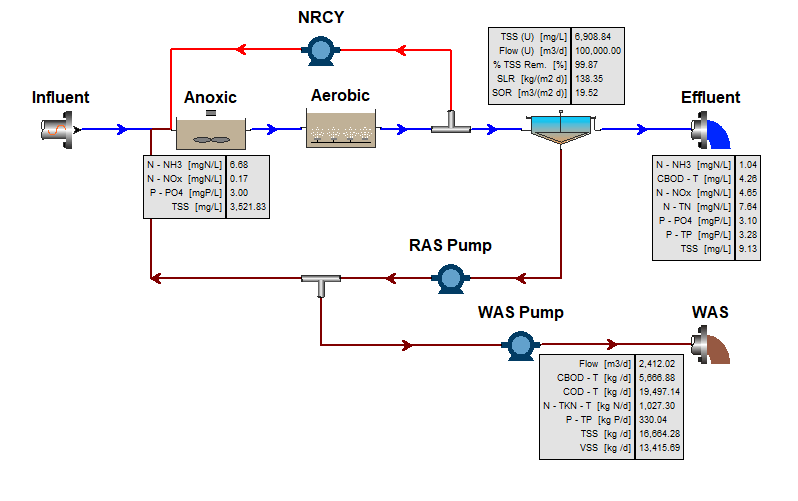
- Can control location (above, below elements)
- Can replace flowsheet icons if desired
MANUAL REFERENCES :
- General Operation > Customizing BioWin > Customizing the Project Appearance > Drawing Board
- General Operation > Customizing BioWin > Customizing the Work Environment > Default tags
- General Operation > Managing BioWin Projects > Setting Project Options > Drawing Board Options
Usability Upgrade – Integrated Influent Specifier
Usability Upgrade – Transpose Tables
Usability Upgrade – Optional Alarms
- As part of the project options, select which alarms are active
MANUAL REFERENCE : General Operation > Managing BioWin Projects > Setting Project Options > Alarm Options
Usability Upgrade – Set All Parameters to Default
Use to upgrade older models to Version 6
Specify which parameter sets to update
MANUAL REFERENCE : General Operation > Managing BioWin Projects > Specifying Project Model Parameter Values
Usability Upgrade – Solution Densities
MANUAL REFERENCE : Model Reference > Chemical Precipitation Reactions
Usability Upgrade – Additional Flow Units
MANUAL REFERENCE : General Operation > Managing BioWin Projects > Setting Project Options > Unit System Cubic meters per hour option for smaller systems
Usability Upgrade – $ per wet tonne sludge costs
Third sludge disposal cost option added
MANUAL REFERENCE : Operating Costs in BioWin > Operating Costs > Sludge
Usability Upgrade – More Examples
BioWin Cabinet reorganized and greatly expanded with additional examples
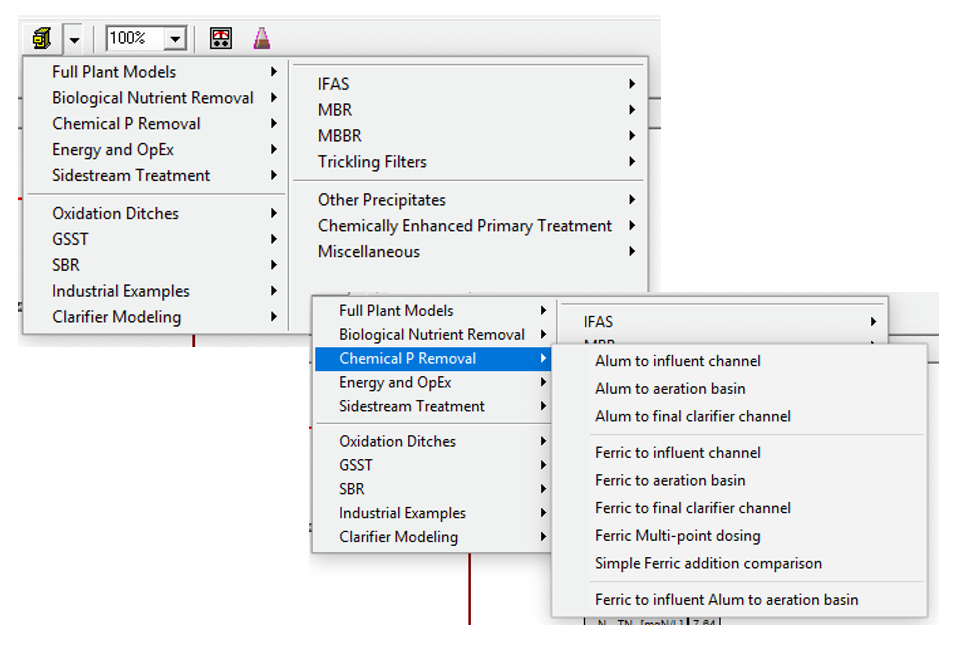
BioWin 5.3
When upgrading from BioWin 5.2 to BioWin 5.3 the link below will provide you with a full installation, including the latest device drivers. Please note that this upgrade will not affect older BioWin versions (BioWin 5.2 and earlier) which are separate applications. This means that users can keep their older copies of BioWin.
PLEASE NOTE
- Annual and Academic License customers can upgrade free of charge at any time via the link below.
- Perpetual License customers who purchased after December 1, 2016 will be emailed instructions on how to electronically upgrade to BioWin 5.3 free of charge. If you have not received your upgrade email, please contact us. Customers who purchased BioWin prior to December 1, 2016 may order an upgrade here for US$3,300.
BioWin updater will not automatically upgrade BioWin 5.2 to BioWin 5.3. You MUST run the full installation from the link provided. Thereafter the updater will always be checking that your files are up to date.
Instructions
- Click the download button.
- Click Save to save the installation file to your computer.
- When the download is complete locate the installation file bw53setup.exe and run it.
Do not plug in your SafeNet Key until the installation is complete. BioWin 5.3 requires a License Activation Code – when you first run the program you’ll be prompted to enter the code. For annual license and academic customers, your current activation code should be valid for BioWin 5.3, simply enter and apply this code to activate BioWin 5.3. For purchase customers, you can click here to order the upgrade to 5.3.
New Developments in BioWin 5.3
BioWin 5.3 contains a new Granular Sludge Sequencing Tank element to model this process, which is gaining acceptance worldwide as an effective wastewater treatment technology. BioWin 5.3 also contains an enhancement to the trickling filter element and refinements to model parameters. A more comprehensive description of the upgrade may be found in the document What's New in BioWin 5.3 in PDF format.
Note : Files created in older versions of BioWin can be loaded in BioWin 5.3, but not the reverse. We suggest that old files opened in BioWin 5.3 should be saved in a separate directory from the original files.
BioWin 5.2
When upgrading from BioWin 5.1 to BioWin 5.2 the link below will provide you with a full installation, including the latest device drivers. Please note that this upgrade will not affect older BioWin versions (BioWin 5.1 and earlier) which are separate applications. This means that users can keep their older copies of BioWin.

PLEASE NOTE
- Annual and Academic License customers can upgrade free of charge at any time via the link below.
- Perpetual License customers who purchased after February 1, 2016 will be emailed instructions on how to electronically upgrade to BioWin 5.2 free of charge. If you have not received your upgrade email, please contact us. Customers who purchased BioWin prior to February 1, 2016 may order an upgrade here for US$3,300.
BioWin updater will not automatically upgrade BioWin 5.1 to BioWin 5.2. You MUST run the full installation from the link provided. Thereafter the updater will always be checking that your files are up to date.
Instructions
- Click the download button.
- Click Save to save the installation file to your computer.
- When the download is complete locate the installation file bw52setup.exe and run it.
Do not plug in your SafeNet Key until the installation is complete. BioWin 5.2 requires a License Activation Code – when you first run the program you’ll be prompted to enter the code. For annual license and academic customers, your current activation code should be valid for BioWin 5.2, simply enter and apply this code to activate BioWin 5.2. For purchase customers, you can click here to order the upgrade to 5.2.
New Developments in BioWin 5.2
BioWin 5.2 contains many exciting new updates that build upon the energy and operating cost features first introduced in BioWin 5.0, further expanding its capability as a plant management tool, and for comparing design alternatives. A more comprehensive description of the upgrade may be found in the document What's New in BioWin 5.2 in PDF format.
Note : Files created in older versions of BioWin can be loaded in BioWin 5.2, but not the reverse. We suggest that old files opened in BioWin 5.2 should be saved in a separate directory from the original files.
Save
Save
Save
Save
Save
Save
Save
Save
Save
Save
PetWin 5.2
When upgrading from PetWin 4.1 to PetWin 5.2 the link below will provide you with a full installation, including the latest device drivers. Please note that this upgrade will not affect older PetWin versions (PetWin 4.1 and earlier) which are separate applications. This means that users can keep their older copies of PetWin.
PLEASE NOTE
- Annual and Academic License customers can upgrade free of charge at any time via the link below.
- Perpetual License customers who purchased after April 1, 2016 will be emailed instructions on how to electronically upgrade to PetWin 5.2 free of charge. If you have not received your upgrade email, please contact us. Customers who purchased PetWin prior to April 1, 2016 may order an upgrade here for US$3,300.
PetWin updater will not automatically upgrade PetWin 4.1 to PetWin 5.2. You MUST run the full installation from the link provided. Thereafter the updater will always be checking that your files are up to date.
Instructions
- Click the download button.
- Click Save to save the installation file to your computer.
- When the download is complete locate the installation file pw52setup.exe and run it.
Do not plug in your SafeNet Key until the installation is complete. PetWin 5.2 requires a License Activation Code – when you first run the program you’ll be prompted to enter the code. For annual license and academic customers, your current activation code should be valid for PetWin 5.2, simply enter and apply this code to activate PetWin 5.2. For purchase customers, you can click here to order the upgrade to 5.2.
New Developments in PetWin 5.2
PetWin 5.2 contains many exciting new updates that build upon the energy and operating cost features first introduced in BioWin 5.0, further expanding its capability as a plant management tool, and for comparing design alternatives. A more comprehensive description of the upgrade may be found in the document What's New in PetWin 5.2 in PDF format.
Note : Files created in older versions of PetWin can be loaded in PetWin 5.2, but not the reverse. We suggest that old files opened in PetWin 5.2 should be saved in a separate directory from the original files.
[/one_half_last]
Save
Save
BioWin 5.1
PLEASE NOTE : the link will also update your current Biowin 5.1 license
When upgrading from BioWin 5.0 to BioWin 5.1 the link below will provide you with a full installation, including the latest device drivers. Please note that this upgrade will not affect older BioWin versions (BioWin 5.0 and earlier) which are separate applications. This means that users can keep their older copies of BioWin.

PLEASE NOTE
- Lease customers and academic customers can upgrade free of charge at any time via the link below.
- Purchase Customers who purchased after August 1, 2015 can also upgrade to BioWin 5.1 free of charge – if you are prompted for a new code, please contact us.
- Customers who purchased BioWin prior to August 1, 2015 may order an upgrade here for US$3,300.
BioWin updater will not automatically upgrade BioWin 5.0 to BioWin 5.1. You MUST run the full installation from the link provided. Thereafter the updater will always be checking that your files are up to date.
Instructions
- Click the download button below.
- Click Save to save the installation file to your computer.
- When the download is complete locate the installation file bw51setup.exe and run it.
Do not plug in your SafeNet Key until the installation is complete. BioWin 5.1 requires a Lease Activation Code – when you first run the program you’ll be prompted to enter the code. For lease and academic customers, your current activation code is valid for BioWin 5.1, simply enter and apply this code to activate BioWin 5.1. For purchase customers, you can click here to order the upgrade to 5.1.
Note : Files created in older versions of BioWin can be loaded in BioWin 5.1, but not the reverse. We suggest that old files opened in BioWin 5.1 should be saved in a separate directory from the original files.
New Developments in BioWin 5.1
We have prepared a New Developments in BioWin document for BioWin 5.1 in PDF format. This will help get you started in BioWin 5.1; more comprehensive information is provided in the manual. Click here to download the New Developments in BioWin document.
BioWin 5.0
When upgrading from BioWin 4.1 to BioWin 5.0 the link below will provide you with a full installation, including the latest device drivers. Please note that this upgrade will not affect older BioWin versions (BioWin 4.1 and earlier) which are separate applications. This means that users can keep their older copies of BioWin.
PLEASE NOTE
- Lease customers and academic customers can upgrade free of charge at any time via the link below.
- Purchase Customers who purchased after December 1, 2014 can also upgrade to BioWin 5.0 free of charge – if you are prompted for a new code, please contact us.
- Customers who purchased BioWin prior to December 1, 2014 may order an upgrade here for US$3,300.
BioWin updater will not automatically upgrade BioWin 4.1 to BioWin 5.0. You MUST run the full installation from the link provided. Thereafter the updater will always be checking that your files are up to date.
Instructions
- Click the download button below.
- Click Save to save the installation file to your computer.
- When the download is complete locate the installation file bw50setup.exe and run it.
Do not plug in your SafeNet Key until the installation is complete. BioWin 5.0 requires a Lease Activation Code – when you first run the program you’ll be prompted to enter the code. For lease and academic customers, your current activation code is valid for BioWin 5.0, simply enter and apply this code to activate BioWin 5.0. For purchase customers, you can click here to order the upgrade to 5.0.
Note : Files created in older versions of BioWin can be loaded in BioWin 5.0, but not the reverse. We suggest that old files opened in BioWin 5.0 should be saved in a separate directory from the original files.
New Developments in BioWin 5.0
We have prepared a New Developments in BioWin document for BioWin 5.0 in PDF format. This will help get you started in BioWin 5.0; more comprehensive information is provided in the manual. Click here to download the New Developments in BioWin document.
BioWin 4.1
When upgrading from BioWin 4.0 to BioWin 4.1 the link below will provide you with a full installation, including the latest device drivers. Please note that this upgrade will not affect older BioWin versions (BioWin 4.0 and earlier) which are separate applications. This means that users can keep their older copies of BioWin.
PLEASE NOTE
- Lease customers and academic customers can upgrade free of charge at any time via the link below.
- Purchase Customers who purchased after July 1, 2013 can also upgrade to BioWin 4.1 free of charge - if you are prompted for a new code, please contact us.
- Customers who purchased BioWin prior to July 1, 2013 may order an upgrade here for US$3,300.
BioWin updater will not automatically upgrade BioWin 4.0 to BioWin 4.1. You MUST run the full installation from the link provided. Thereafter the updater will always be checking that your files are up to date.
Instructions
- Click the download button below.
- Click Save to save the installation file to your computer.
- When the download is complete locate the installation file bw41setup.exe and run it.
Do not plug in your SafeNet Key until the installation is complete. BioWin 4.1 requires a Lease Activation Code - when you first run the program you'll be prompted to enter the code. For lease and academic customers, your current activation code is valid for BioWin 4.1, simply enter and apply this code to activate BioWin 4.1. For purchase customers, you can click here to order the upgrade to 4.1.
Note : Files created in older versions of BioWin can be loaded in BioWin 4.1, but not the reverse. We suggest that old files opened in BioWin 4.1 should be saved in a separate directory from the original files.
New Developments in BioWin 4.1
We have prepared a New Developments in BioWin document for BioWin 4.1 in PDF format. This will help get you started in BioWin 4.1; more comprehensive information is provided in the manual. Click here to download the New Developments in BioWin document.
PetWin 4.1
When upgrading from PetWin 3.1 to PetWin 4.1 the link below will provide you with a full installation, including the latest device drivers. Please note that this upgrade will not affect older PetWin versions (PetWin 3.1 and earlier) which are separate applications. This means that users can keep their older copies of PetWin.
PLEASE NOTE
- Annual License customers and academic customers can upgrade free of charge at any time via the link below.
- Perpetual License Customers who acquired PetWin after June 1, 2014 can also upgrade to PetWin 4.1 free of charge – if you are prompted for a new code, please contact us.
- Customers who acquired PetWin prior to June 1, 2014 may order an upgrade here for US$4,500.
PetWin updater will not automatically upgrade PetWin 3.1 to PetWin 4.1. You MUST run the full installation from the link provided. Thereafter the updater will always be checking that your files are up to date.
Instructions
- Click the download button below.
- Click Save to save the installation file to your computer.
- When the download is complete locate the installation file pw41setup.exe and run it.
Do not plug in your SafeNet Key until the installation is complete. PetWin 4.1 requires a License Activation Code – when you first run the program you’ll be prompted to enter the code. For Annual License and academic customers, your current activation code is valid for PetWin 4.1, simply enter and apply this code to activate PetWin 4.1. For Perpetual License customers, you can click here to order the upgrade to 4.1.
Note : Files created in older versions of PetWin can be loaded in PetWin 4.1, but not the reverse. We suggest that old files opened in PetWin 4.1 should be saved in a separate directory from the original files.

New Developments in PetWin 4.1
We have prepared a New Developments in PetWin document for PetWin 4.1 in PDF format. This will help get you started in PetWin 4.1; more comprehensive information is provided in the manual. Click here to download the New Developments in PetWin document.
BioWin 4.0
(looking for an upgrade to version 4.1? click here)
When upgrading from BioWin 3.1 to BioWin 4.0 the link below will provide you with a full installation, including the latest device drivers. Please note that this upgrade will not affect older BioWin versions (BioWin 3.1 and earlier) which are separate applications. This means that users can keep their older copies of BioWin.
BioWin updater will not automatically upgrade BioWin 3.1 to BioWin 4.0. You MUST run the full installation from the link provided. Thereafter the updater will always be checking that your files are up to date.
Instructions
- Click the download button below.
- Click Save to save the installation file to your computer.
- When the download is complete locate the installation file bw40setup.exe and run it.
Do not plug in your SafeNet Key until the installation is complete. BioWin 4.0 requires a Lease Activation Code - when you first run the program you'll be prompted to enter the code. For lease and academic customers, your current activation code is valid for BioWin 4.0, simply enter and apply this code to activate BioWin 4.0. For purchase customers, you can click here to order the upgrade to 4.0.
Note : Files created in older versions of BioWin can be loaded in BioWin 4.0, but not the reverse. We suggest that old files opened in BioWin 4.0 should be saved in a separate directory from the original files.
New Developments in BioWin 4.0
We have prepared a New Developments in BioWin document for BioWin 4.0 in PDF format. This will help get you started in BioWin 4.0; more comprehensive information is provided in the manual. Click here to download the New Developments in BioWin document.
PetWin 3.2
Click here to download PetWin 3.2
BioWin 3.1
Click here to download BioWin 3.1
PetWin 3.1
Click here to download PetWin 3.1
BioWin 3.0
Click here to download BioWin 3.0
BioWin 2.2
Click here to download BioWin 2.2
BioWin 2.1
Click here to download BioWin 2.1


